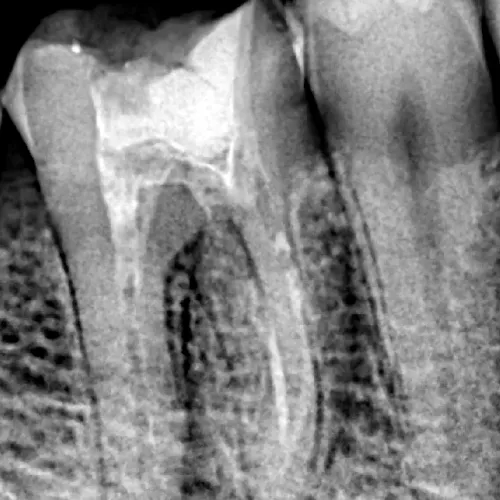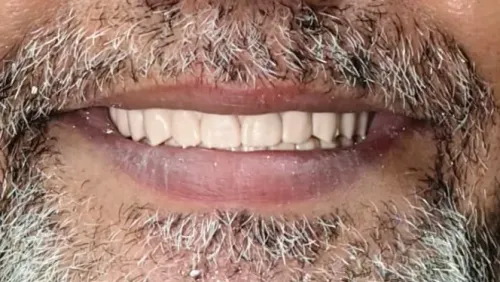
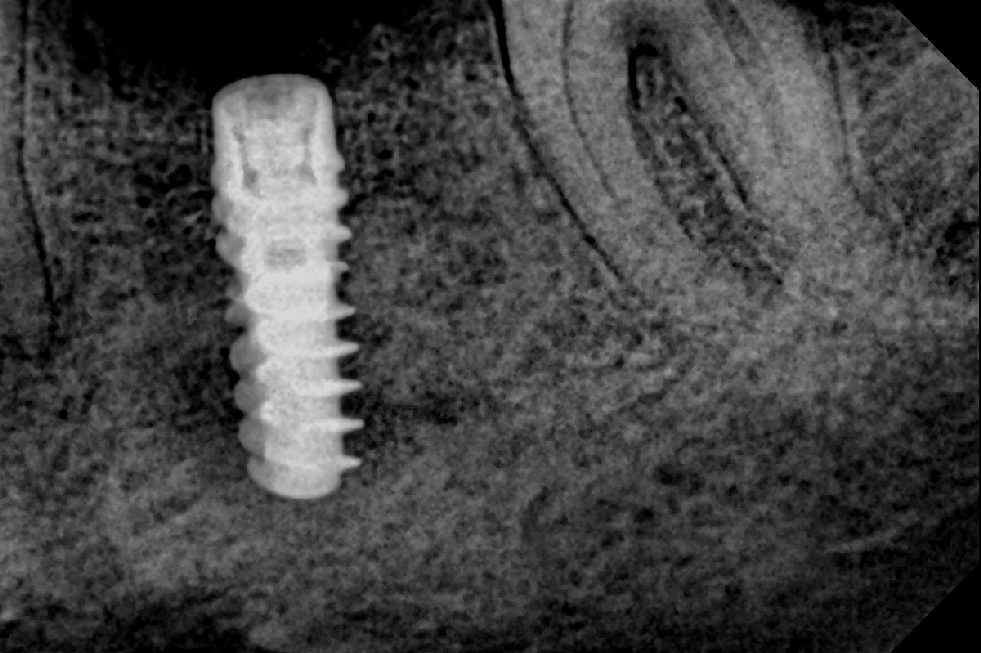
Have you been told that you do not have enough bone for dental implants? Does the idea of bone grafting make you worried about additional surgery, healing time or cost?
You are not alone. One of the most common concerns patients have before dental implant treatment is whether their jawbone is strong and sufficient to support an implant.
The good news is that insufficient bone does not automatically mean you cannot get dental implants. In selected cases, bone grafting can help rebuild or preserve the bone needed for implant placement.
Let's understand when bone grafting is required, how the procedure works, how long healing takes, and what you can expect during treatment.
1. Why Is Bone Important for Dental Implants?
A dental implant is a small titanium fixture placed inside the jawbone to replace the root of a missing tooth.
For an implant to function successfully, it needs adequate bone around it to provide support and allow the implant to integrate with the surrounding bone. This biological process is called osseointegration.
When a tooth is lost, the surrounding jawbone may gradually shrink because it no longer receives the stimulation that comes from natural tooth roots.
Bone loss can also occur due to:
- Long-standing missing teeth.
- Advanced gum disease.
- Previous tooth infections or dental abscesses.
- Traumatic tooth extraction.
- Previous cysts or other jaw conditions.
- Anatomical limitations, particularly in the upper back jaw.
If the available bone is insufficient in height, width or quality, placing an implant in the ideal position may become difficult.
2. When Is Bone Grafting Needed for Dental Implants?
Bone grafting is recommended when the existing jawbone cannot adequately support the planned implant in the desired position.
However, not every patient needs bone grafting before dental implants. The decision depends on the clinical examination, bone dimensions and implant position required for the final restoration.
Here are some common situations where it may be considered.
A. When the jawbone is too narrow
Sometimes, the jawbone has adequate height but is too narrow to accommodate an implant with sufficient surrounding bone.
Bone grafting may help increase the width of the ridge.
B. When the jawbone has lost height
Long-standing tooth loss or advanced periodontal disease may result in significant reduction in bone height.
In selected cases, bone augmentation can help rebuild the available bone.
C. After extraction of an infected or damaged tooth
When a tooth is extracted, the surrounding bone naturally remodels. If significant bone loss is expected or the socket has damaged walls, socket preservation may be considered.
This involves placing bone graft material into the extraction socket to help maintain the ridge for future treatment.
D. When the upper back jaw has insufficient bone height
The upper back jaw has an anatomical structure called the maxillary sinus. Following tooth loss, the bone beneath the sinus may become thin.
A procedure called a sinus lift may be recommended to create additional bone height for implant placement when appropriate.
3. What Are the Different Types of Dental Bone Grafting?
Bone grafting is not a single procedure. The technique and material depend on the amount and location of bone deficiency.
1. Socket Preservation
This is performed at the time of tooth extraction.
- The extraction socket is cleaned.
- Bone graft material may be placed into the socket.
- A protective membrane may be used.
- The area is allowed to heal.
Purpose: To help reduce the loss of bone volume after extraction and preserve the ridge for possible future implant placement.
2. Horizontal Bone Augmentation
This procedure is used when the jawbone is too narrow.
The dentist places graft material along the deficient part of the ridge. A membrane may be used to protect the graft and support bone regeneration.
3. Vertical Bone Augmentation
When the available bone height is insufficient, a more complex procedure may be needed to rebuild the ridge vertically.
This technique requires careful case selection and may involve longer healing periods.
4. Sinus Lift Procedure
A sinus lift is used in selected cases where there is insufficient bone height in the upper back jaw.
There are two commonly used approaches:
- Internal or crestal sinus lift: Usually considered when only a relatively small increase in bone height is required.
- Lateral window sinus lift: Often used when a greater amount of bone augmentation is needed.
The appropriate technique depends on the existing bone height, sinus anatomy and implant treatment plan.
4. What Material Is Used for Bone Grafting?
Different graft materials are available. Your dentist selects the material according to the procedure, the size of the defect and the desired healing characteristics.
Type of graft
Source
General description
Autograft
Patient's own bone
Bone collected from another area of the patient's body
Allograft
Human donor bone
Processed donor-derived material
Xenograft
Animal-derived source
Processed material, commonly used as a bone scaffold
Alloplast
Synthetic material
Man-made graft material designed to support bone regeneration
Sometimes, a combination of materials is used.
A bone graft does not necessarily turn completely into the patient's own bone. Some materials are gradually remodelled, while others may remain as part of the regenerated bone structure.
Your dentist should explain which material is being used and why it is appropriate for your treatment.
5. How Does Bone Grafting Work? Step by Step
The exact procedure varies, but a typical bone grafting procedure follows these stages.
Step 1: Examination and digital assessment
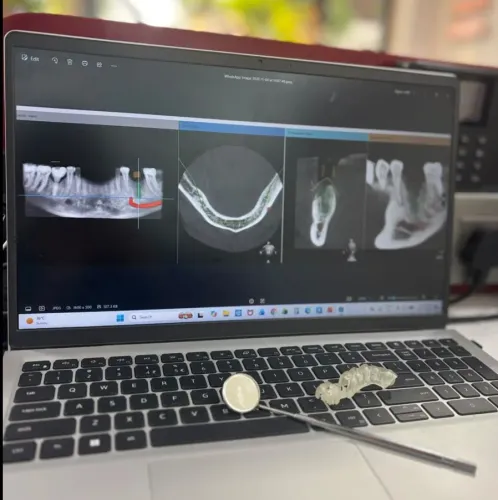
Your dentist examines the gums, teeth and jawbone. CBCT imaging may be recommended to assess bone width, height and nearby anatomical structures when clinically indicated.
Step 2: Preparation of the area
The procedure is usually performed under local anaesthesia. The gum tissue is carefully opened to access the deficient bone.
Step 3: Placement of graft material
The selected graft material is placed in the area where additional bone is required. A membrane may be used to protect the graft and support regeneration.
Step 4: Closure and healing
The gum tissue is repositioned and sutured. The graft is left undisturbed while healing and bone regeneration take place.
Step 5: Implant placement
Depending on the grafting procedure and implant stability, the implant may be placed at the same time as grafting or after a separate healing period.
6. Can Bone Grafting and Dental Implant Placement Be Done Together?
Yes. In selected cases, bone grafting and implant placement can be performed during the same surgery.
This is sometimes called simultaneous bone augmentation and implant placement.
It may be considered when:
- Adequate native bone is available to achieve initial implant stability.
- The bone defect can be predictably managed around the implant.
- The surgical site is suitable for grafting.
- The planned implant position is achievable.
However, if there is extensive bone loss or insufficient bone to stabilise the implant, a staged approach may be safer.
In a staged approach, bone grafting is performed first. After adequate healing, the implant is placed.
The decision should be based on the clinical situation rather than an attempt to shorten treatment time.
7. How Long Does Bone Grafting Take to Heal?
Healing time depends on the size of the graft, its location, the material used and the patient's healing capacity.
Procedure
General healing consideration
Socket preservation
Often around 3–6 months before implant placement is considered
Minor bone augmentation
May require around 3–6 months
Larger ridge augmentation
May require 6–9 months or longer
Sinus lift
Often around 6–9 months, depending on the procedure and available bone
These are approximate planning ranges, not fixed timelines. Some cases can be treated sooner, while more complex grafts may need longer.
Your dentist will assess healing before proceeding with implant placement or loading.
8. Is Bone Grafting Painful?
Bone grafting is usually performed under local anaesthesia, so you should not feel sharp pain during the procedure.
Afterwards, you may experience:
- Swelling.
- Mild to moderate discomfort.
- Bruising.
- Tenderness while chewing.
- Temporary difficulty opening the mouth, particularly after more extensive procedures.
These symptoms usually improve during recovery, although the duration varies with the extent of surgery.
Your dentist will provide post-operative instructions and suitable medication based on your needs.
Contact your dentist promptly if you develop increasing pain, worsening swelling after the expected recovery period, fever, pus, persistent bleeding or graft material that appears to be exposed or coming out.
9. What Should You Avoid After Bone Grafting?
Following your dentist's instructions is important to protect the surgical site.
- Avoid disturbing the grafted area with your fingers or tongue.
- Do not brush directly over the surgical site until instructed.
- Avoid smoking and tobacco, as they can impair healing.
- Avoid vigorous rinsing or spitting during the initial recovery period.
- Follow the recommended soft-food diet.
- Avoid chewing hard or crunchy food near the graft.
- Take prescribed medication as directed.
- Attend follow-up appointments.
Good oral hygiene is important, but it must be maintained in a way that does not disrupt the healing area.
10. What Happens If You Do Not Have Enough Bone for an Implant?
Bone grafting is one option, but it is not the only possible solution.
Depending on your anatomy and treatment goals, your dentist may also consider:
- Shorter or narrower implants in suitable cases.
- Alternative implant positions.
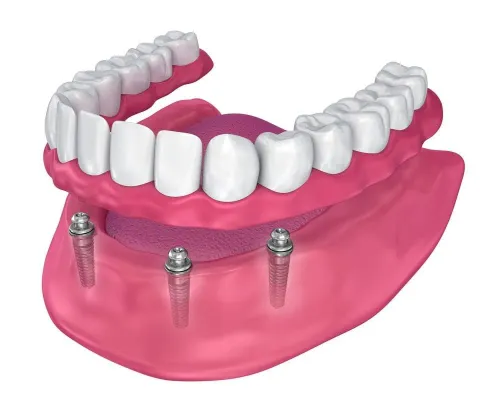
- Angled implants for selected full-arch treatments.
- Sinus augmentation.
- Other advanced bone reconstruction procedures.
- A conventional bridge or removable denture if implant treatment is unsuitable.
The goal is not simply to place an implant. It is to place it in a position that supports a functional, maintainable and aesthetically appropriate restoration.
11. Frequently Asked Questions
Is bone grafting always necessary before dental implants?
No. Many patients have adequate bone and can receive implants without additional grafting. Bone grafting is recommended only when the available bone is insufficient for the planned treatment or when preserving the ridge is considered beneficial.
Can my body reject a bone graft?
True rejection is not the usual way graft complications are described. However, grafts can fail to integrate or heal as intended. Infection, wound opening, graft exposure, smoking and other patient or surgical factors can affect healing.
Can a dental implant be placed immediately after tooth extraction without bone grafting?
Yes, in selected cases. Immediate implant placement may be possible if the socket anatomy, bone availability, infection control and implant stability are suitable. A graft may still be required to manage a gap or deficient bone around the implant.
Does bone grafting increase the cost of dental implants?
It can increase the overall treatment cost because it may involve additional materials, surgical procedures, membranes and follow-up visits. The cost depends on the complexity and extent of grafting.
How do I know if I need bone grafting?
A clinical examination and appropriate imaging help determine the amount of available bone. A CBCT scan may be recommended when three-dimensional information is needed for treatment planning.
Can smokers undergo bone grafting?
Smoking increases the risk of impaired healing and complications. Patients who smoke should discuss the risks with their dentist and are generally advised to stop smoking before and after surgery for as long as their treating team recommends.
The Bottom Line
Bone grafting can make dental implant treatment possible for patients who have insufficient jawbone, but it is not required in every case.
The most important step is understanding how much bone is available, where the implant needs to be positioned, and whether grafting will improve the long-term treatment plan.
At Procare Dental LLP, we use clinical assessment and digital planning, including CBCT when indicated, to evaluate implant treatment options for patients in Thane and Mulund West, Mumbai.
If you have been told that you do not have enough bone for dental implants, a second opinion may help you understand whether bone grafting, an alternative implant approach or another tooth replacement option is appropriate.
Procare Dental LLP – Thane & Mulund West, Mumbai
🌐 www.procaredental.in
📞 7071876876
Keywords