Have you had a root canal treatment in the past, but your tooth has started hurting again? Or has your dentist noticed an infection near the root of a tooth that was already treated?
You may be wondering: Does this mean the tooth needs to be extracted?
Not necessarily. In some cases, a tooth that has undergone root canal treatment can be saved through a procedure called root canal retreatment.
Retreatment involves reopening the previously treated tooth, cleaning and disinfecting the root canals again, and sealing them to address persistent or recurrent infection.
Let's understand why a root canal may fail, when retreatment is recommended, and what alternatives may be available.
1. What Is Root Canal Retreatment?
Root canal treatment removes inflamed or infected tissue from inside a tooth. The root canals are cleaned, disinfected, and sealed, and the tooth is then restored to protect it from further damage.
Occasionally, infection persists or returns after the initial treatment. This may happen because bacteria remain inside a canal, a canal was difficult to locate, or bacteria enter the tooth again through a defective restoration.
Root canal retreatment is a second attempt to treat the inside of a previously root-treated tooth.
During retreatment, the dentist or endodontist may:
- Remove the existing filling material from the root canals.
- Examine the tooth and look for missed or complex canals.
- Clean and disinfect the canals again.
- Address suitable complications within the root canal system.
- Seal the canals with new filling material.
- Restore the tooth with an appropriate filling or crown, depending on its condition.
The objective is to control infection and preserve the natural tooth whenever a predictable result is possible.
2. Why Does a Root Canal Treatment Fail?
A previously treated tooth can develop problems months or even years after the original procedure. This does not automatically mean that the first treatment was performed incorrectly; some teeth have complex anatomy or other challenges.
Common reasons include:
1. Missed or difficult-to-find canals
Some teeth have additional canals or unusual root anatomy. If a canal remains untreated, bacteria may persist and cause inflammation around the root.
2. Persistent infection
Bacteria can survive in complex areas of the root canal system despite appropriate treatment. This may lead to continued or recurrent infection.
3. Leakage beneath a crown or filling
If a restoration becomes loose, cracks, or develops gaps, bacteria may enter the tooth again and contaminate the root canal system.
4. A cracked tooth or root
A crack may allow bacteria to reach the surrounding tissues. Depending on its location and extent, it may make retreatment less predictable or render the tooth unsuitable for saving.
5. Delayed or inadequate final restoration
A root-treated tooth may be vulnerable to reinfection or fracture if it is not adequately restored. The appropriate restoration depends on how much healthy tooth structure remains and the forces on the tooth.
3. What Are the Signs That You May Need Root Canal Retreatment?
Not every previously treated tooth that feels uncomfortable requires retreatment. Your dentist will investigate the cause before recommending a procedure.
Possible signs include:
- Pain or tenderness when biting.
- Persistent or recurring pain around the treated tooth.
- Swelling or a pimple-like bump on the gum near the tooth.
- Tenderness when the dentist examines the surrounding tissues.
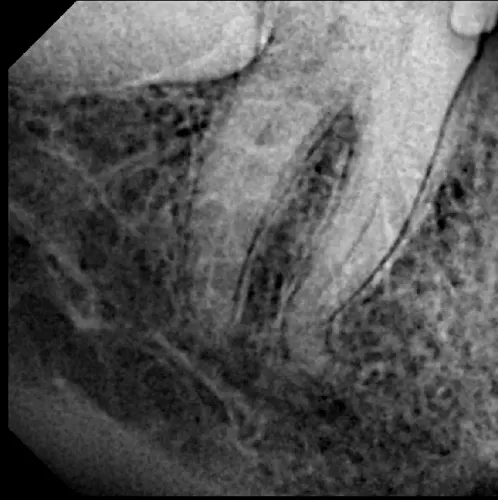
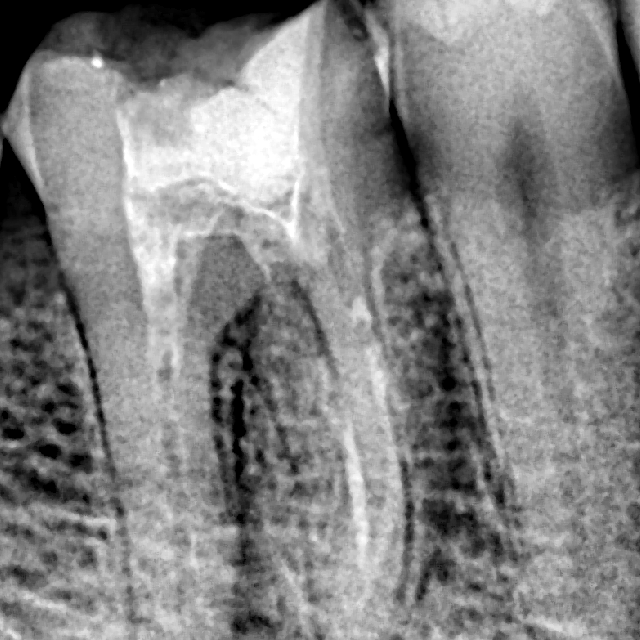
- A new or persistent dark area around the root on a dental X-ray.
- A loose, broken, or leaking crown or filling.
Important: Some teeth with persistent infection have no pain or swelling at all. A dental examination and appropriate imaging may reveal a problem before symptoms appear.
If you develop facial swelling, fever, or worsening pain, arrange prompt dental care. Difficulty breathing or swallowing, or rapidly spreading swelling, requires emergency assessment.
4. How Is Root Canal Retreatment Performed?
The procedure depends on the original treatment, the tooth's anatomy, the restoration, and the suspected cause of the problem.
Step 1: Examination and diagnosis
Your dentist reviews your symptoms, examines the tooth and gums, and takes suitable X-rays. A CBCT scan may be considered in selected complex cases when 3D information could change treatment.
Step 2: Accessing the root canals
The dentist may need to remove the existing crown or filling, or create an opening through the restoration when appropriate. Old root canal filling material is then removed.
Step 3: Cleaning and disinfection
The canals are carefully examined, cleaned, and disinfected. The dentist may address missed canals or other treatable problems where possible.
Step 4: Sealing the canals
Once the canals have been appropriately prepared, they are filled and sealed again. Depending on the case, medication and a temporary filling may be used between appointments.
Step 5: Final restoration and review
The tooth is restored with a suitable filling or crown. Follow-up may include clinical examination and X-rays to assess healing over time.
Some cases can be completed in one visit, while others require multiple appointments. The number of visits depends on the complexity of the tooth and the treatment needed.
5. Is Root Canal Retreatment Painful?
Most retreatment procedures are performed under local anaesthesia, which helps control pain during treatment.
You may experience mild tenderness or soreness afterwards, particularly if the tissues around the root were already inflamed. This usually improves over the following days.
If pain is severe, increases instead of settling, or is accompanied by swelling or fever, contact your dentist.
Retreatment may be technically more complex than the initial procedure because the tooth may contain old filling material, posts, crowns, or other restorations. In some cases, referral to an endodontist with specialised equipment and training may be appropriate.
6. How Long Does Root Canal Retreatment Take?
The duration depends on the tooth and the complexity of the problem.
Factor
How it may affect treatment
Front tooth with relatively straightforward anatomy
May be simpler to retreat
Molar with multiple or curved canals
May require more time
Existing post or complex restoration
May make access more difficult
Persistent infection or drainage
May require staged treatment
Cracks or significant loss of tooth structure
May affect whether retreatment is appropriate
A straightforward case may be completed in one appointment, while a complex case may need more than one visit. Healing around the root can take months, so clinical success is assessed over time rather than immediately after treatment.
7. Root Canal Retreatment vs Tooth Extraction: Which Is Better?
The right choice depends on whether the tooth can be restored and whether infection can be predictably controlled.
Consideration
Root canal retreatment
Tooth extraction
Main goal
Preserve the natural tooth
Remove the affected tooth
Best suited for
A restorable tooth with a treatable root canal problem
A tooth that cannot be predictably saved, or when extraction is otherwise indicated
Treatment involved
Reopening, cleaning, disinfecting, and resealing the canals
Removing the tooth and allowing the area to heal
Further treatment
May need a new filling or crown
Replacement may be considered with an implant, bridge, or removable prosthesis
Important limitation
Success is not guaranteed
Removes the tooth but may create a need to manage the missing space
Whenever feasible and appropriate, preserving a natural tooth is worth considering. However, retreatment is not the best option for every tooth, particularly when there is a severe root fracture, insufficient remaining tooth structure, or periodontal support that cannot be maintained.
An endodontist or restorative dentist can help compare the expected benefits, risks, cost, and long-term outlook of the available options.
8. Can a Root Canal Be Retreated More Than Once?
Yes, in selected cases. However, the decision depends on the reason the previous treatment did not succeed and whether the underlying problem can be corrected.
Depending on the findings, alternatives may include:
- Nonsurgical retreatment: Reopening and treating the canals again.
- Endodontic surgery: Such as an apicoectomy, in which the affected root tip and surrounding diseased tissue are treated in suitable cases.
- Extraction: If the tooth is not predictably restorable or other approaches are unsuitable.
Repeated procedures without identifying the underlying cause may not resolve the problem. A careful diagnosis is essential.
9. How Can You Reduce the Risk of Problems After Root Canal Treatment?
A few practical steps can help protect a root-treated tooth:
- Get the recommended permanent restoration completed at the appropriate time.
- Brush twice daily with fluoride toothpaste and clean between your teeth.
- Avoid chewing very hard foods on a tooth that has not yet received its definitive restoration.
- Attend dental reviews, especially if the tooth previously had an infection.
- Seek assessment if a crown loosens, a filling breaks, or pain returns.
A crown is often recommended for a structurally weakened back tooth, but it is not automatically necessary for every root-treated tooth. The decision depends on the remaining tooth structure, fracture risk, and clinical findings.
Frequently Asked Questions
1. Can a failed root canal be saved without extraction?
Often, yes. Nonsurgical retreatment or endodontic surgery may preserve some teeth that would otherwise be considered for extraction. The feasibility depends on the diagnosis and restorability of the tooth.
2. How successful is root canal retreatment?
Success varies with the cause of the original problem, tooth anatomy, the quality of the restoration, and other clinical factors. Your dentist can discuss the likely prognosis for your specific tooth; no procedure can guarantee success.
3. Does root canal retreatment require a crown?
Not always, but a crown or another protective restoration may be recommended when substantial tooth structure is missing or fracture risk is high. Your dentist will assess the tooth before deciding.
4. Can an X-ray show whether a root canal has failed?
A dental X-ray may show changes around the root that suggest persistent disease. However, interpretation must be combined with symptoms and clinical examination. A 3D CBCT scan may help in selected cases where conventional images are insufficient.
5. Can infection return years after a root canal?
Yes. A tooth can develop recurrent infection years later, for example if bacteria re-enter through a damaged restoration or a problem within the root canal system persists. New symptoms should be assessed rather than ignored.
6. Is retreatment more expensive than the first root canal?
It can be, because the procedure may be more complex and may require specialist care or replacement of an existing restoration. Costs vary with the tooth, the treatment required, and the clinic.
The Bottom Line
Root canal retreatment is an option for some teeth that develop persistent or recurrent problems after an earlier root canal. It involves identifying the cause, cleaning and disinfecting the canals again, and sealing and restoring the tooth.
A failed root canal does not automatically mean that the tooth must be extracted. A proper examination helps determine whether retreatment, endodontic surgery, or extraction is the most appropriate option.
At Procare Dental LLP, patients from Thane and Mulund West can seek an assessment of a previously treated tooth and discuss suitable options based on their symptoms, clinical findings, and X-rays.
Procare Dental LLP – Thane & Mulund West, Mumbai
🌐 www.procaredental.in
📞 7071876876
Keywords