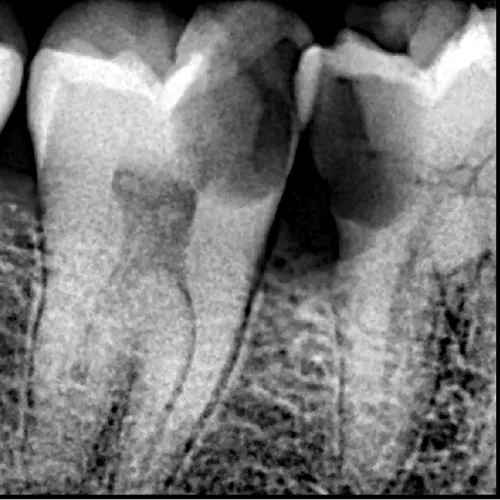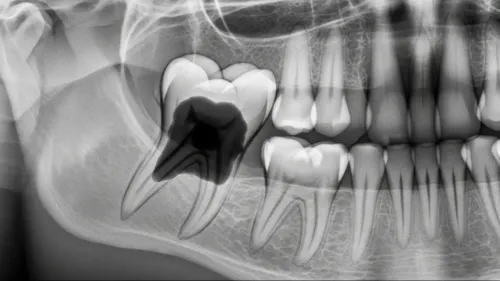
Have you ever wondered why your dentist may recommend a 3D dental scan instead of just a regular dental X-ray?
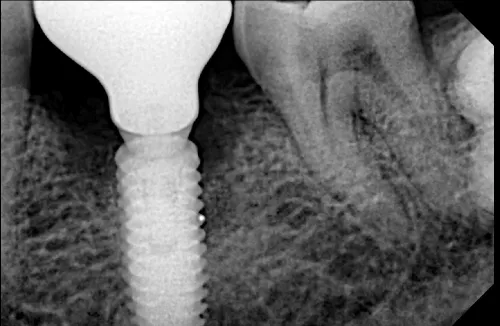
A regular dental X-ray provides useful information, but it shows your teeth and surrounding structures in a limited, two-dimensional view. In selected cases, a 3D dental scan can provide a more detailed picture of your teeth, jawbone and important anatomical structures, helping your dentist plan treatment with greater confidence.
This is especially useful for dental implants, impacted wisdom teeth and certain complex dental procedures.
1. What Exactly Is a 3D Dental Scan?
A 3D dental scan usually refers to Cone Beam Computed Tomography (CBCT).
Unlike a conventional dental X-ray, which produces a two-dimensional image, a CBCT scanner captures multiple images and reconstructs them into a three-dimensional view.
Your dentist can examine the jaw from different angles and assess structures that may be difficult to evaluate on a standard X-ray.
A CBCT scan may help assess:
- Bone height, width and shape
- The position of tooth roots
- Impacted teeth
- The location of nerves and sinuses
- Certain cysts, lesions or other abnormalities
- Bone available for dental implant placement
Important: A 3D scan is not necessary for every dental treatment. Your dentist recommends it when the additional information is likely to influence diagnosis or treatment planning.
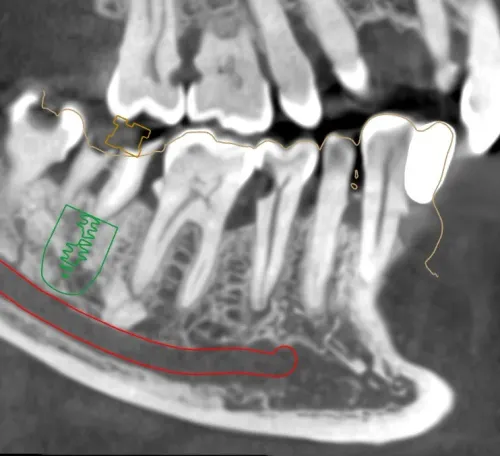
2. How Does a 3D Scan Help With Dental Implants?
Dental implants require careful planning because the implant must fit within the available bone while supporting a well-positioned replacement tooth.
A CBCT scan can help your dentist assess:
- Bone quantity: Is there sufficient bone height and width?
- Nerve location: Where does the important nerve in the lower jaw run?
- Sinus position: Is the implant site close to the maxillary sinus?
- Implant dimensions: What implant length and diameter may be appropriate?
- Implant position: Where can the implant be placed to support the planned
For example, a patient missing a lower molar may appear to have enough bone on a conventional X-ray. A 3D scan may reveal that the available bone height is limited by the position of the nerve.
This information can influence the implant position, implant dimensions or whether an additional procedure should be considered.
Why this matters
The aim is not simply to place an implant where bone is available. It is to plan a position that considers the bone, surrounding anatomy and the final replacement tooth together.
3. Can a 3D Scan Help Avoid Unexpected Problems?
A 3D scan can reveal important anatomical details that may not be clear on conventional two-dimensional images.
Depending on the case, it may help your dentist:
- Identify the relationship between an impacted wisdom tooth and a nearby nerve.
- Evaluate complex root anatomy.
- Assess bone defects around teeth.
- Investigate selected dental problems that remain unclear after an examination and conventional imaging.
- Plan certain surgical procedures more carefully.
However, a CBCT scan cannot identify every dental problem, and it does not eliminate all surgical risks. The findings must be interpreted alongside your symptoms, clinical examination and other relevant investigations.
4. How Does a 3D Scan Help With Wisdom Tooth Removal?
Wisdom teeth sometimes develop at an angle or remain partially or completely trapped within the jawbone.
In selected cases, a CBCT scan can show the relationship between the wisdom tooth roots and the nearby nerve in three dimensions.
his may help the dentist decide:
- How the tooth is positioned
- Whether the roots are close to important structures
- How complex the procedure may be
- Whether a different surgical approach should be considered
Not every wisdom tooth needs a 3D scan. A conventional dental X-ray may provide sufficient information in many cases.
5. How Does a 3D Scan Work With Digital Dentistry?
Modern dental treatment can combine different types of digital information.
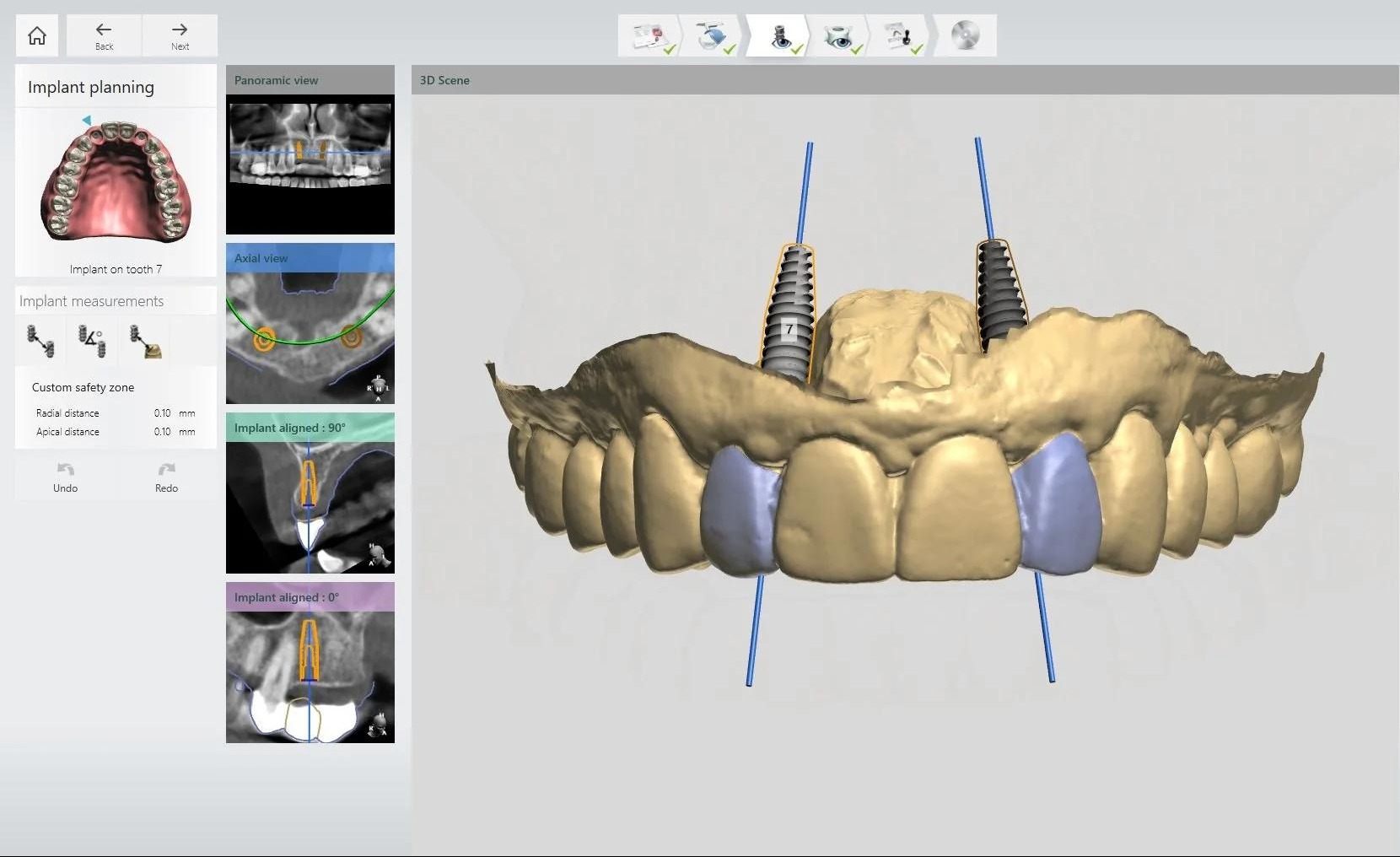
For example, in implant planning:
Step 1: CBCT scan
Provides three-dimensional information about the jawbone and important anatomical structures.
Step 2: Intraoral scan
Records the surfaces and positions of the teeth and other visible oral structures.
Step 3: Digital treatment planning
The information can be combined, when appropriate, to plan implant positions in relation to the proposed teeth.
Step 4: Guided surgery, when indicated
A custom surgical guide may help transfer the digital plan to the patient's mouth.
This integrated approach can improve treatment planning and help make the planned procedure more predictable. The accuracy of the final result still depends on the quality of the data, clinical judgement, surgical execution and the individual patient's anatomy.
6. Is a 3D Dental Scan Safe?
CBCT uses X-rays, so it involves exposure to ionising radiation. The dose varies with the scanner, field of view and scanning settings.
For this reason, a 3D scan should be prescribed only when clinically justified, using the smallest field of view and lowest exposure that provide the necessary diagnostic information.
Your dentist will consider whether a conventional X-ray is sufficient or whether the additional detail from CBCT is worth the extra radiation exposure.
7. Does Everyone Need a 3D Dental Scan?
No. The choice depends on the treatment being planned and the clinical question that needs to be answered.
Dental situation
Is a 3D scan needed?
Routine dental check-up
Usually not
Small cavity
Usually not
Straightforward root canal
Often not; selected complex cases may benefit
Dental implant planning
Frequently useful, depending on the case
Complex impacted wisdom tooth
May be recommended
Selected jawbone or surgical problems
May be useful
Your dentist should explain why the scan is recommended and how the findings could change your treatment.
The Bottom Line
A 3D dental scan is more than just a detailed picture. When used appropriately, it helps your dentist understand your anatomy, assess potential risks and plan treatment based on information that may not be visible on a conventional X-ray.
The goal is not to use more technology for every patient. It is to use the right diagnostic tool for the right treatment.
At Procare Dental LLP, Thane and Mulund West, Mumbai, CBCT assessment and digital planning may be incorporated into implant treatment and other selected procedures when clinically indicated.
🌐 www.procaredental.in 📞 7071876876
Keywords