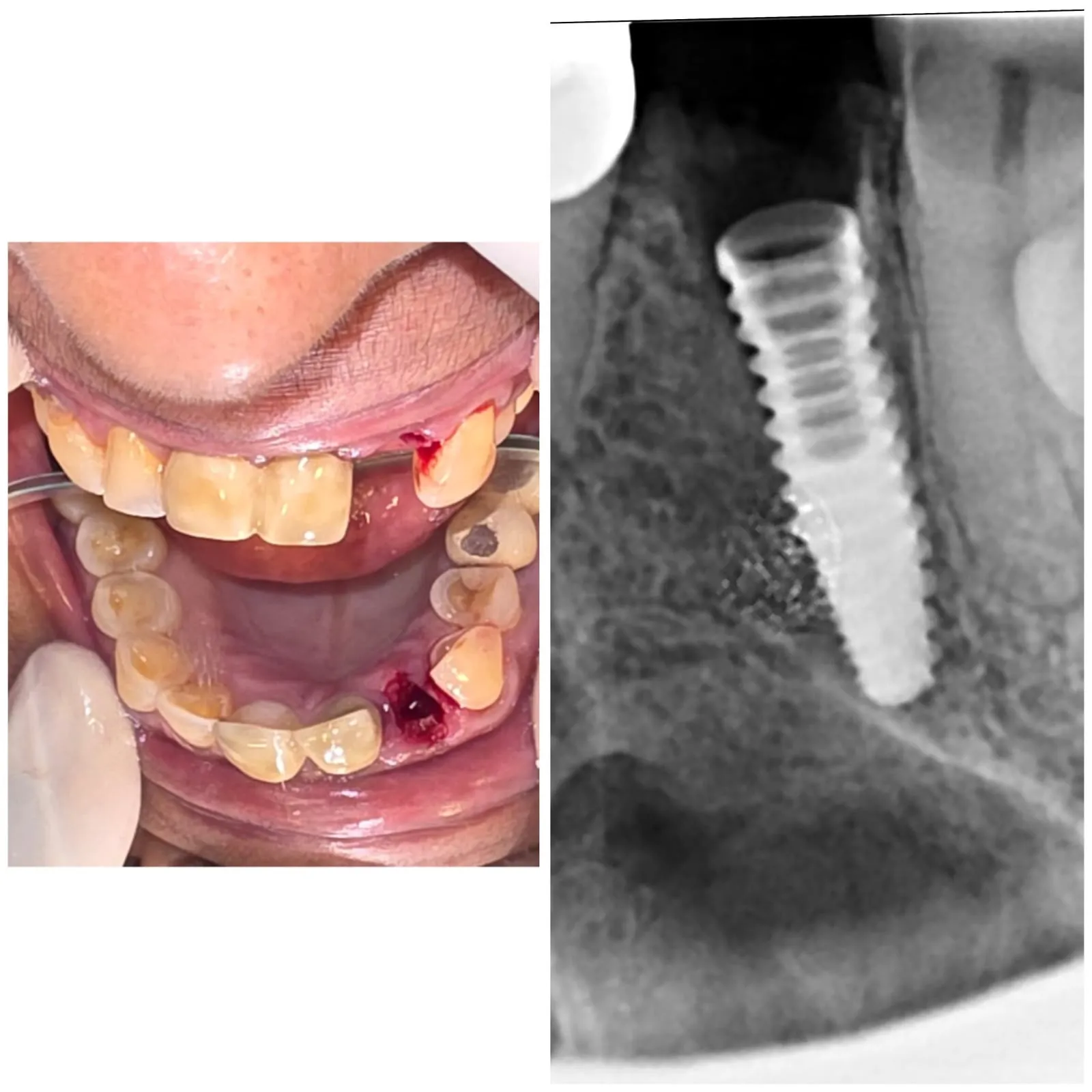
Losing a tooth often raises an important question: “Do I have to wait for the extraction site to heal before getting a dental implant?”
Not always.
In carefully selected cases, a dental implant can be placed immediately after the tooth is extracted, during the same appointment. This is known as immediate implant placement.
However, immediate placement is not suitable for every patient. The condition of the bone, gums, tooth, infection and bite all need to be evaluated before deciding whether this approach is appropriate.
If you are considering dental implants in Thane or Mulund West Mumbai, here's what you should know.
🦷 What Is an Immediate Dental Implant?
Normally, tooth replacement may follow this sequence:
Tooth extraction → healing → implant placement → implant healing → crown
With immediate implant placement, the sequence can sometimes be:
Tooth extraction → implant placement during the same procedure → healing → crown
The implant is placed into the extraction socket immediately after the tooth is removed.
This can reduce the number of separate surgical procedures and, in appropriate cases, may help preserve the existing anatomy of the extraction site.
However, placing the implant immediately does not mean the implant is fully healed immediately. The implant still needs time to integrate with the surrounding bone.
👤 Who Is a Good Candidate for an Immediate Implant?
There is no single checklist that guarantees eligibility. Your dentist needs to assess the individual tooth and surrounding tissues.
Generally, favourable factors include:
🦴 1. Adequate Bone Around the Tooth
The implant needs sufficient bone to achieve appropriate stability.
If extraction has resulted from trauma or severe infection, there may be defects in the surrounding bone.
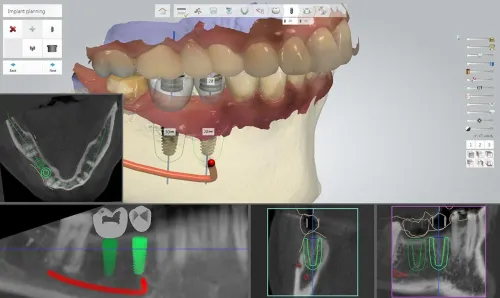
A CBCT scan can help your dentist evaluate the three-dimensional anatomy and determine whether immediate placement is feasible.
🦷 2. Healthy or Manageable Gum Tissues
The condition of the gums is important for implant treatment.
Active, uncontrolled periodontal disease should generally be addressed rather than simply placing an implant into an unhealthy environment.
Good gum health also contributes to maintaining the tissues around the eventual implant restoration.
🦠 3. Infection Must Be Carefully Assessed
This is an important point because patients often hear:
“If the tooth is infected, an immediate implant cannot be placed.”
The reality is more nuanced.
The type, location and severity of infection, along with the condition of the surrounding bone and ability to thoroughly clean the socket, all influence the decision.
Some infected extraction sites may still be suitable for immediate implant placement after appropriate management, while others are better treated using a staged approach.
Your dentist needs to assess the site rather than applying a blanket rule.
💪 4. The Implant Must Be Stable
One of the most important requirements for immediate placement is achieving adequate primary stability.
The implant needs to engage suitable bone to remain stable while biological healing occurs.
If adequate stability cannot be achieved, immediate loading may not be appropriate, and a different treatment plan may be recommended.
😬 5. Your Bite Should Be Suitable
The forces placed on the implant during early healing matter.
Patients with heavy biting forces or significant teeth grinding may require additional precautions.
If a temporary tooth is planned, your dentist may design it so that excessive forces are avoided during the healing period.
🦷 Which Teeth Are Often Considered for Immediate Implant Placement?
Immediate implants can be considered for different areas of the mouth, but the treatment approach varies according to the location.
Front Teeth
Immediate implants can be particularly attractive in the visible smile zone because maintaining the surrounding gum architecture can be important for aesthetics.
However, the front of the mouth can also be technically demanding because the bone and soft tissues may be thin.
Back Teeth
Immediate implant placement may also be possible for selected premolars and molars, but the anatomy, available bone and chewing forces need careful evaluation.
The location of the tooth alone does not determine whether immediate placement is suitable.
❌ Who May Not Be a Good Candidate?
Immediate implant placement may not be appropriate when there is:
- Severe bone loss
- Extensive destruction of the socket
- An unfavourable fracture pattern
- Uncontrolled periodontal disease
- An infection that makes immediate placement unsuitable
- Inability to achieve adequate implant stability
- Unfavourable bite or excessive functional forces
- A need for extensive bone reconstruction
In such cases, your dentist may recommend a staged implant approach.
This might involve:
Extraction → socket preservation/bone grafting → healing → implant placement
This can take longer, but the goal is to create a more predictable foundation for the implant.
🩻 Why Is a CBCT Scan Important?
A conventional dental X-ray provides useful information, but implant planning often benefits from three-dimensional imaging.
A CBCT scan can help evaluate:
- Bone height
- Bone width
- Root position
- Socket anatomy
- Nearby anatomical structures
- Available implant dimensions
- Bone defects
This information can help your dentist decide whether immediate placement is appropriate and plan the implant position.
🦷 Can an Immediate Implant Be Placed if the Tooth Is Infected?
Sometimes—but not always.
This is one of the most important distinctions in immediate implant treatment.
A local infection does not automatically mean that immediate implantation is impossible. The dentist must determine:
- Where the infection is located
- Whether there is acute swelling or an abscess
- How much bone remains
- Whether the socket can be adequately cleaned
- Whether sufficient implant stability can be achieved
If the conditions are unfavourable, delaying implant placement may be the safer option.
⚡ Can You Get a Temporary Tooth on the Same Day?
In selected cases, yes.
If adequate implant stability is achieved and the bite is suitable, a temporary crown or tooth may be provided soon after implant placement.
This can be particularly useful when a front tooth is being replaced.
But there is an important distinction:
Immediate implant placement ≠ immediate loading.
An implant can be placed immediately after extraction without necessarily having a tooth attached to it immediately.
The loading protocol is determined separately based on implant stability, location, bite and the overall treatment plan.
🦴 What Happens After an Immediate Implant?
Once the implant is placed, the body begins the healing process.
First few days
The extraction and surgical site begins healing. Swelling and tenderness may occur.
First few weeks
The gum tissues continue to heal while the implant remains stable.
Following months
Bone gradually integrates with the implant surface through osseointegration.
After adequate healing
The implant can be restored with the planned permanent crown.
The exact timeline varies between patients.
🆚 Immediate vs Delayed Implant Placement
FeatureImmediate ImplantDelayed ImplantImplant placementAt extraction appointmentAfter healingNumber of surgical stagesMay be reducedMay require separate stagesBone conditionMust be favourableMore time for site preparationInfectionRequires careful assessmentSite can heal before implantBone graftingMay sometimes be performed simultaneouslyMay be performed before implantTemporary toothPossible in selected casesDepends on treatment planSuitable for everyone?❌ NoMore broadly applicable
🌟 Potential Advantages of Immediate Implant Placement
When appropriately planned, immediate placement may offer:
✔ Fewer surgical appointments
Extraction and implant placement may be combined.
✔ Shorter treatment pathway
Some stages of treatment can overlap.
✔ Earlier tooth replacement
A temporary tooth may be possible in selected cases.
✔ Preservation of the extraction-site anatomy
Immediate placement can help support the treatment plan for the extraction socket, although it does not completely prevent natural post-extraction bone remodeling.
⚠️ What Are the Limitations?
Immediate implants require careful case selection.
The treatment can become challenging when:
- Bone walls are damaged
- The socket has a large defect
- Infection is extensive
- Primary stability is inadequate
- The gum tissues are compromised
- Excessive forces are expected
In these situations, waiting can actually be the better option.
A staged implant does not mean that treatment has failed—it may simply be the most predictable way to achieve a stable result.
🦷 What Should You Do Before Extraction?
If you already know that a tooth needs to be removed and you may eventually want an implant, tell your dentist before the extraction.
This is important because implant planning can influence how the tooth is extracted and how the extraction socket is managed.
Your dentist may consider:
- Whether immediate implant placement is possible
- Socket preservation
- Bone grafting
- The desired final tooth position
- Temporary tooth options
- The long-term restoration
Planning before extraction can help avoid unnecessary loss of bone and simplify future treatment where appropriate.
❓ Frequently Asked Questions
Can an implant be placed on the same day as extraction?
Yes. Immediate implant placement is possible in selected cases when the bone, soft tissues, infection status and implant stability are favourable.
Is immediate implantation better than waiting?
Not necessarily. Immediate placement can have advantages in suitable cases, but delayed placement may be more predictable when bone or gum conditions are unfavourable.
Can I get a temporary tooth immediately?
In selected cases, yes. Whether immediate loading is possible depends on implant stability, location, bite forces and the overall treatment plan.
Does an immediate implant heal faster?
Not necessarily. Immediate placement can reduce the time between extraction and implant placement, but the implant still requires biological healing and osseointegration.
What if I have an infection?
The dentist needs to assess the type and severity of infection. Some sites may be suitable for immediate placement after appropriate management, while others may need to heal first.
Do I need a bone graft with an immediate implant?
Not always. Some patients have adequate bone, while others may require grafting to manage a bone defect or support the desired implant position.
Is immediate implant placement painful?
The procedure is performed under appropriate anaesthesia. Some swelling, tenderness or discomfort can occur afterward, as with other oral surgical procedures.
🦷 The Bottom Line
Immediate dental implants can be an excellent treatment option—but only for carefully selected patients.
The decision depends on much more than simply having a tooth that needs extraction.
Your dentist needs to evaluate:
Bone + gums + infection + implant stability + bite + final tooth position
If these factors are favourable, an implant may sometimes be placed immediately after extraction, and a temporary tooth may even be provided on the same day.
If they are not favourable, a staged approach with healing or bone grafting may provide a more predictable result.
If you are planning to have a tooth extracted and are considering immediate dental implants in Thane or Mulund West Mumbai, discuss implant planning before the tooth is removed.
Procare Dental LLP – Thane & Mulund West, Mumbai
📞 7071876876
Keywords