Do you often feel that food gets stuck between the same two teeth every time you eat?
It may seem like a minor inconvenience, but repeatedly getting food trapped in one particular area can sometimes indicate an underlying dental problem.
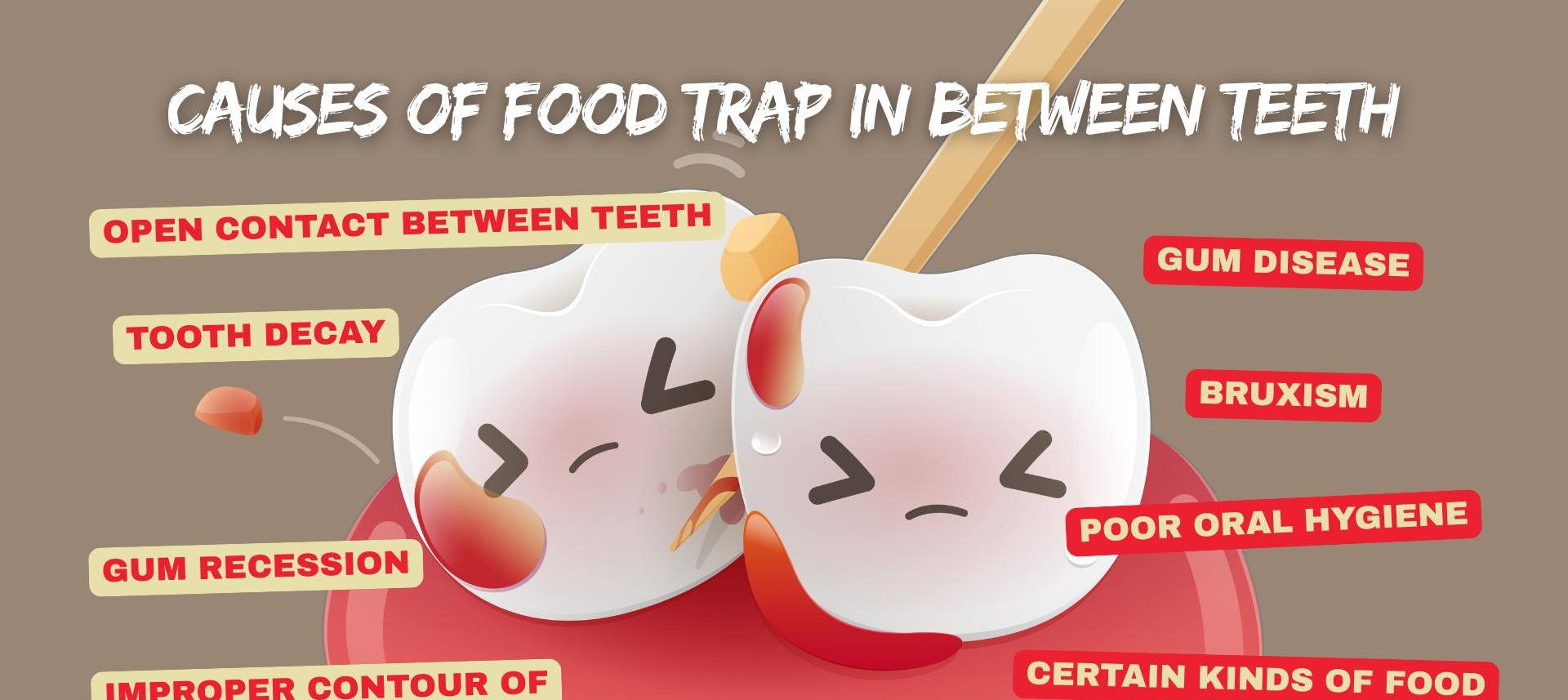
Food impaction can occur because of gaps between teeth, cavities, gum recession, changes in the bite, worn fillings, poorly fitting crowns or changes in the supporting bone and gums.
If you regularly need to use a toothpick or floss to remove food from the same area, it is worth having it checked.
🦷 Why Does Food Keep Getting Stuck Between My Teeth?
Occasional food trapping is normal. Certain foods—such as fibrous vegetables, meat or leafy foods—can naturally become lodged between teeth.
The concern is when the same area repeatedly traps food.
Some common causes include:
1. A Gap Between the Teeth
A space between two teeth can allow food to become wedged during chewing.
The gap may be:
- Naturally present
- Created by gum recession
- Related to tooth movement
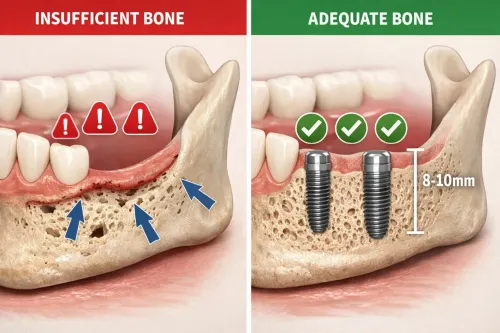
- Caused by loss of supporting bone
Food can become compressed into the space every time you chew.
🦷 2. Dental Cavity Between Two Teeth
A cavity that develops on the side of a tooth facing its neighbour can change the normal shape of the contact between the teeth.
This can create an area where food becomes trapped.
These cavities can be difficult to see in the mirror because they occur between the teeth.
Your dentist may recommend an examination and, when appropriate, dental X-rays to identify decay that isn't visible clinically.
🦷 3. Gum Disease and Bone Loss
Periodontal disease can cause loss of the bone and tissues supporting the teeth.
As the supporting tissues change, spaces may develop between teeth.
These spaces can become food traps.
Other signs that may accompany this include:
- Bleeding gums
- Red or swollen gums
- Bad breath
- Gum recession
- Loose teeth
- Increasing spaces between teeth
If food trapping occurs along with these symptoms, a periodontal evaluation is particularly important.
🦷 4. A Worn or Damaged Filling
If you have previously had a filling between two teeth, the filling may wear, fracture or change the shape of the contact area.
A poorly shaped contact can allow food to become trapped repeatedly.
Your dentist can assess whether the restoration needs adjustment or replacement.
👑 5. A Crown or Bridge That Doesn't Have the Right Contact
Crowns and bridges need to be carefully designed so that they contact the neighbouring teeth appropriately.
If the contact is too open, food may repeatedly become trapped.
This can be particularly noticeable after receiving a new crown or bridge.
If food started getting stuck after a dental restoration was placed, tell your dentist.
🦷 6. Tooth Movement
Teeth are not permanently fixed in exactly the same position throughout life.
They can move because of:
- Gum disease
- Missing teeth
- Changes in bite
- Orthodontic treatment
- Natural tooth movement
Even a small change in tooth position can alter the way food moves between the teeth.
😬 7. Changes in Your Bite
Your teeth work together as a system.
If the bite changes because of tooth wear, missing teeth, a new restoration or tooth movement, the way food is directed during chewing can change.
Your dentist may therefore assess your occlusion (bite) when investigating persistent food impaction.
🦷 Is Food Getting Stuck Between Teeth a Problem?
It can be.
When food remains trapped repeatedly, it can contribute to:
- Plaque accumulation
- Gum irritation
- Bad breath
- Gum inflammation
- Increased risk of decay in susceptible areas
If you repeatedly remove food but the underlying cause remains, the problem may continue.
🚨 When Should You See a Dentist?
Make an appointment if:
🔴 Food gets stuck between the same teeth repeatedly
🔴 The area bleeds when you floss
🔴 Your gums are swollen or painful
🔴 You have persistent bad breath
🔴 You notice a hole or dark area on the tooth
🔴 The tooth is sensitive to hot, cold or sweets
🔴 A filling or crown feels different
🔴 Your teeth appear to be moving
🔴 You have a loose tooth
Persistent food trapping is particularly important when it is a new change.
🪥 What Should You Do When Food Gets Stuck?
The safest first step is usually gentle cleaning between the teeth.
Use dental floss
Carefully guide the floss between the teeth and clean the sides of both teeth.
Don't snap the floss forcefully into the gums.
Try an interdental brush
If the space is large enough, an appropriately sized interdental brush can be very effective.
Your dentist or hygienist can help you choose the correct size.
Rinse with water
Rinsing after meals can help remove loose food particles.
A water flosser can also be useful for some patients, depending on the situation.
❌ Should You Use a Toothpick?
Try not to make sharp toothpicks your regular method of cleaning between teeth.
Aggressive or repeated picking can injure the gums.
Instead, use floss, interdental brushes or other cleaning aids recommended by your dentist.
If you constantly need something to remove food from the same area, don't just keep cleaning it—find out why the food is getting stuck in the first place.
🦷 Can Food Getting Stuck Cause Cavities?
Food itself doesn't directly 'cause' a cavity.
However, persistent food and plaque accumulation can create an environment that favours bacterial activity and acid production, increasing the risk of decay—particularly if oral hygiene and fluoride exposure are inadequate.
This is one reason why a new or persistent food trap deserves attention.
🩸 Why Does the Area Bleed When I Remove Food?
Bleeding can be a sign of gum inflammation.
If food is repeatedly impacted into the same area, the surrounding gum can become irritated.
However, frequent bleeding during cleaning should not simply be considered normal.
It may indicate plaque-related gingivitis, periodontal disease or another local problem.
🦷 What If Food Gets Stuck Around an Implant?
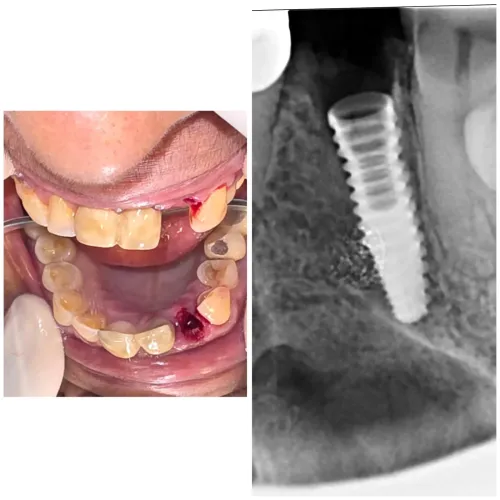
Food can also become trapped around a dental implant, particularly around certain implant-supported crowns or bridges.
This may happen because of:
- Restoration design
- Space around the implant
- Gum or bone changes
- Difficulty cleaning the area
Persistent food trapping around an implant should be evaluated because inflammation around implants can affect the surrounding tissues.
Your dentist can show you the most appropriate cleaning method for your particular restoration.
🩻 What Will the Dentist Check?
If you complain of repeated food trapping, your dentist may examine:
- The contact between the teeth
- Tooth decay
- Gum health
- Bone support
- Existing fillings
- Crowns and bridges
- Tooth position
- Bite
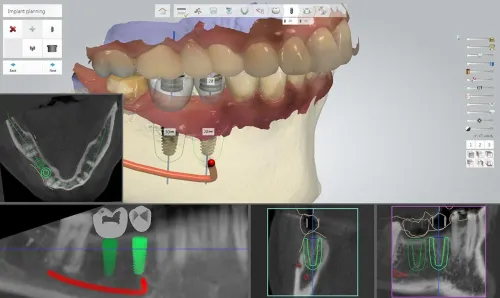
Dental X-rays may be recommended if decay between teeth or changes in bone support need to be evaluated.
🛠️ How Is Food Impaction Treated?
Treatment depends entirely on the cause.
If there is a cavity
➡️ The decay may need to be restored.
If a filling has an open contact
➡️ The restoration may need adjustment or replacement.
If a crown has an inappropriate contact
➡️ The crown may need modification or replacement.
If gum disease is responsible
➡️ Periodontal treatment and improved maintenance may be required.
If teeth have moved
➡️ Your dentist may discuss orthodontic or restorative options depending on the situation.
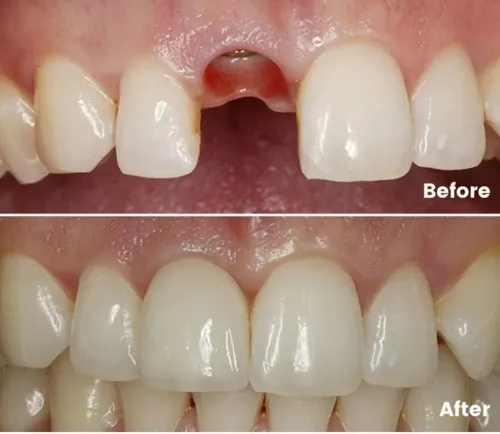
If a tooth is missing
➡️ Replacing the missing tooth may help restore the overall function and contact relationships.
There is no single treatment for food getting stuck between teeth because the underlying cause matters.
🦷 Can Flossing Stop Food From Getting Stuck?
Flossing can help remove trapped food and plaque, but it doesn't necessarily correct the reason food keeps getting trapped.
If the contact between two teeth has changed because of decay, gum disease, tooth movement or a restoration, flossing alone won't fix the underlying issue.
Think of floss as the cleaning solution—not necessarily the treatment for the food trap.
❓ Frequently Asked Questions
Why does food always get stuck between the same two teeth?
Repeated food trapping can be caused by an open contact, cavity, gum recession, bone loss, tooth movement or an issue with a filling, crown or bridge.
Is it normal for food to get stuck between teeth?
Occasionally, yes. But if food repeatedly gets trapped in the same location, it is worth having the area examined.
Can food getting stuck cause gum disease?
Repeated food accumulation can contribute to plaque buildup and gum inflammation. However, persistent food trapping may also be a symptom of an underlying periodontal problem.
Why does my gum bleed when food gets stuck?
The gum may be inflamed or irritated. Persistent bleeding should be assessed rather than assumed to be caused only by food.
Why does food get stuck after getting a filling?
A filling that doesn't recreate an appropriate contact between the teeth can sometimes allow food to become trapped. Your dentist can check the contact and adjust or replace the restoration if necessary.
Why does food get stuck between my implant and tooth?
The relationship between the implant crown and neighbouring tooth can create a space where food becomes trapped. Your dentist can evaluate the restoration, gum tissues and bone and recommend appropriate cleaning or treatment.
🦷 The Bottom Line
If food keeps getting stuck between the same teeth, don't simply accept it as normal.
It may be something as simple as an open contact, but it can also be a sign of decay, gum disease, bone loss, tooth movement or a problem with an existing restoration.
Gentle flossing or interdental cleaning can help keep the area clean, but if the problem is persistent, the underlying cause should be identified.
If you're experiencing repeated food trapping, bleeding gums, bad breath, tooth sensitivity or a change in your bite, schedule a dental examination.
Procare Dental LLP – Thane & Mulund West, Mumbai
📞 7071876876
Keywords