Losing a tooth can seem like a problem you can postpone—especially if there is no pain. But leaving a missing tooth untreated for a long time can lead to changes in the jawbone, neighbouring teeth, bite and overall oral health.
If you are considering dental implants in Thane or Mulund West Mumbai, understanding what happens after tooth loss can help you make an informed decision.
🦷 1. Jawbone Can Start Shrinking
One of the most important changes after tooth loss is bone resorption.
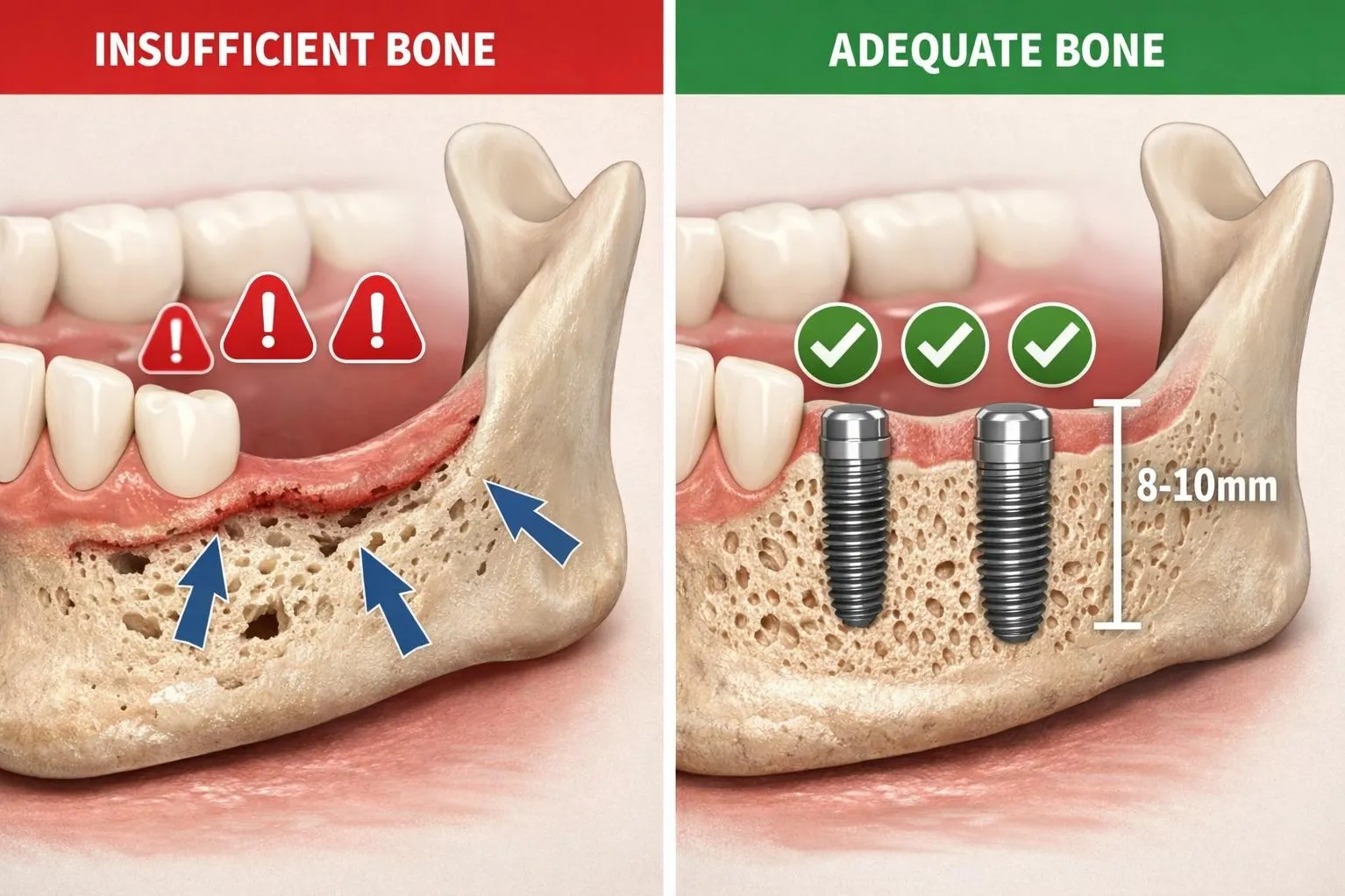
The roots of natural teeth stimulate the surrounding jawbone. When a tooth is removed, that stimulation disappears, and the bone around the extraction site can gradually reduce in height and width.
The longer the tooth remains missing, the more bone loss may occur.
This does not mean that an implant becomes impossible—but additional treatment may sometimes be required.
🦴 2. You May Need Bone Grafting
If there is not enough bone to support an implant properly, your dentist may recommend a bone grafting procedure.
Bone grafting can help rebuild deficient areas and create a more suitable foundation for implant placement.
Depending on the location and amount of bone loss, treatment may involve:
- Socket preservation
- Bone augmentation
- Ridge augmentation
- Sinus lift for certain upper-back teeth
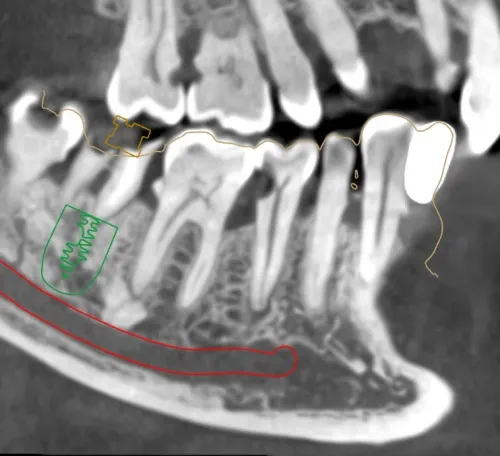
Not everyone who delays an implant will need a bone graft. A CBCT scan and clinical examination are usually needed to determine the amount of available bone.
↔️ 3. Neighbouring Teeth Can Shift
A missing tooth can affect the position of surrounding teeth.
The teeth next to the empty space may gradually tilt or drift into the gap, while the opposing tooth can sometimes move further into the space.
This may make the original implant position more complicated and can affect your bite.
In some cases, orthodontic treatment may be needed to create or restore adequate space before an implant can be placed.
😬 4. Your Bite May Change
When one or more teeth are missing, chewing forces are redistributed to the remaining teeth.
Over time, changes in tooth position and bite can contribute to:
- Difficulty chewing
- Uneven biting forces
- Food getting trapped around shifted teeth
- Increased wear on some teeth
Replacing the missing tooth can help restore a more balanced chewing system, depending on the overall condition of your teeth and bite.
😁 5. Your Facial Appearance Can Be Affected
Significant bone loss, particularly when multiple teeth have been missing for a long time, can contribute to changes in the shape and support of the lower face.
A single missing tooth may not cause a noticeable facial change, but multiple missing teeth over many years can have a greater effect.
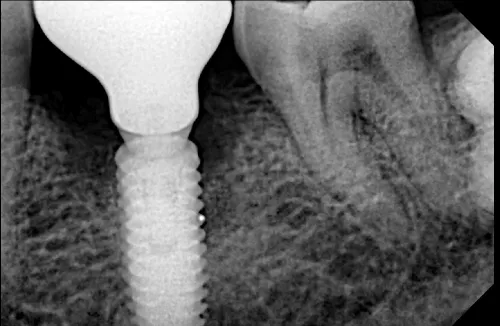
Dental implants can replace the missing tooth root as well as support a crown, helping restore both function and appearance.
🦷 6. Replacing the Tooth May Become More Complicated
Getting an implant soon after tooth loss isn't always necessary. Some patients are perfectly suitable for implants months or even years later.
However, delaying treatment can sometimes mean that the original straightforward implant plan becomes more complex.
For example:
Tooth extraction → adequate bone → implant → crown
may instead become:
Tooth loss → bone loss → bone graft → healing → implant → healing → crown
This can increase the overall treatment time and number of procedures.
⏳ How Long Is 'Too Long' to Wait?
There is no single deadline after which you can no longer get a dental implant.
A person may receive an implant months or even years after losing a tooth, provided the mouth can be appropriately prepared.
However, waiting longer can increase the possibility of:
- Bone loss
- Tooth movement
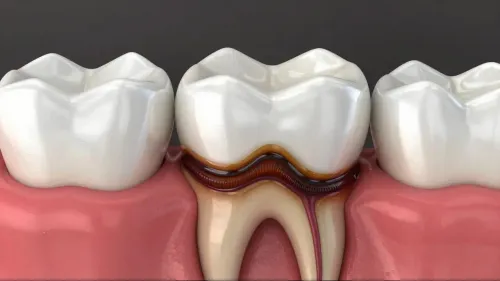
- Gum problems
- Bite changes
- Need for additional procedures
The important point is that you don't necessarily need an implant immediately, but it is worth having the missing tooth assessed rather than simply ignoring it.
🩻 What If You've Had a Missing Tooth for Years?
Don't assume that it is too late.
Your dentist can evaluate:
- The condition of your gums
- The amount of available bone
- The position of neighbouring teeth
- Your bite
- The location of important nerves or sinuses
- Your overall oral health
A CBCT scan can provide detailed information about the bone available for implant planning.
If bone has reduced, options such as bone grafting may make implant treatment possible.
💡 Can You Avoid Bone Loss After Tooth Extraction?
Planning the replacement before or around the time of extraction can sometimes help preserve the extraction site.
Depending on the situation, your dentist may consider:
- Immediate implant placement
- Socket preservation
- Early implant placement
- Delayed implant placement
The appropriate approach depends on factors such as infection, bone condition, gum health and whether sufficient primary stability can be achieved.
🦷 Should You Get an Implant Immediately?
Not necessarily.
Immediate implant placement is suitable only in selected cases. Sometimes waiting is actually the better and safer option.
The goal is not simply to place an implant as quickly as possible. The goal is to create healthy, stable conditions for a long-lasting restoration.
Frequently Asked Questions
Can I get a dental implant after 5 years?
Yes. A dental implant can often be placed years after tooth loss, but bone loss may mean that additional procedures are required.
What happens if I don't replace a missing tooth?
The jawbone can gradually shrink, neighbouring teeth may shift, and your bite and chewing pattern can change.
Is bone loss after tooth loss reversible?
Bone that has already been lost does not normally grow back on its own. Bone grafting or other augmentation procedures may sometimes be used to rebuild the area.
Does everyone with an old missing tooth need bone grafting?
No. The need for grafting depends on the amount and shape of available bone and the implant plan.
Is it too late for a dental implant?
Usually, there is no simple 'too late' point. Even patients with long-standing tooth loss may be candidates after appropriate evaluation and preparation.
🦷 Don't Ignore a Missing Tooth
A missing tooth may not hurt, but that doesn't mean nothing is changing.
If you have been postponing implant treatment for months or years, a dental evaluation can determine whether there has been bone loss or movement of the surrounding teeth and what options are available now.
At Procare Dental LLP, implant planning may include clinical examination, digital imaging and CBCT-based assessment when indicated, allowing treatment to be planned according to the patient's individual bone and oral health.
Procare Dental LLP – Thane & Mulund West, Mumbai
📞 7071876876
Keywords