Brushing twice a day is one of the most important habits for maintaining good oral health. But when choosing a toothbrush, many people wonder:
Is an electric toothbrush better than a manual toothbrush?
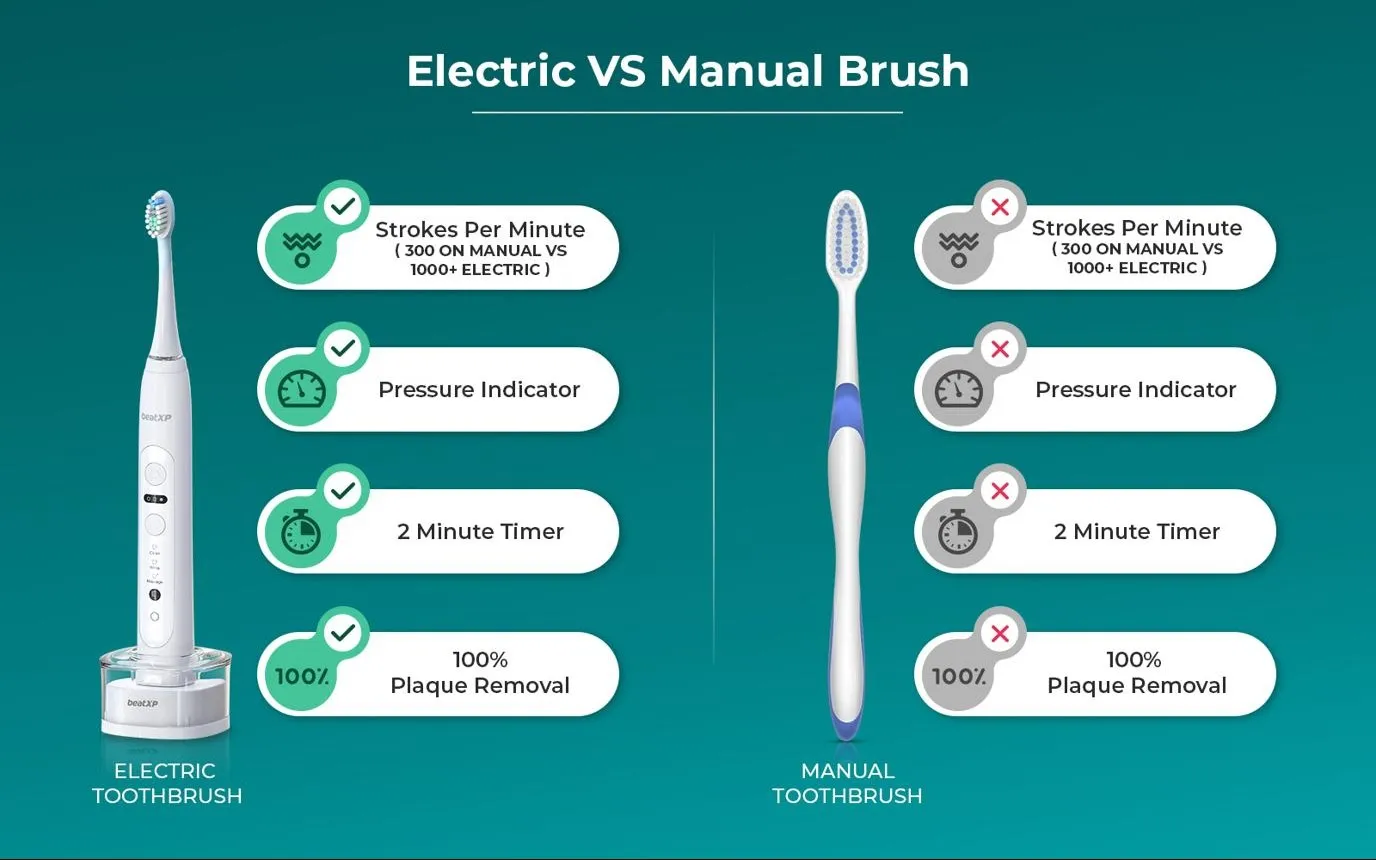
The short answer is: both can clean your teeth effectively when used correctly. However, an electric toothbrush may offer advantages for people who struggle with brushing technique, apply too much pressure, or have difficulty cleaning consistently.
If you're looking for advice on oral hygiene in Thane or Mulund West Mumbai, here's how electric and manual toothbrushes compare.
🪥 Electric vs Manual Toothbrush
FeatureElectric ToothbrushManual ToothbrushPlaque removalVery effective with proper useVery effective with proper techniqueEase of use⭐⭐⭐⭐⭐⭐⭐Pressure controlSome models have pressure sensorsDepends on the userBuilt-in timerCommonUsually not availableCostHigherLowerTravel convenienceRequires charging/batteryVery convenientTechniqueEasier for some usersRequires proper technique
⚡ Advantages of an Electric Toothbrush
An electric toothbrush uses powered movements to clean the teeth.
1. Helps With Plaque Removal
Research suggests powered toothbrushes can provide a modest advantage in reducing plaque and gingivitis compared with manual brushing, particularly with consistent use.
2. Built-in Timer
Many electric toothbrushes have a 2-minute timer, helping you brush for the recommended duration.
Some divide the brushing time into intervals so you spend enough time on each area of your mouth.
3. Pressure Sensor
Some models alert you when you're brushing too hard.
This can be useful for people with:
- Gum recession
- Sensitive teeth
- A tendency to brush aggressively
4. Helpful for People With Limited Dexterity
Electric toothbrushes may be easier to use for people who have difficulty making precise brushing movements.
They can also be useful for some older adults and people with certain hand or mobility limitations.
🪥 Advantages of a Manual Toothbrush
A manual toothbrush is simple, inexpensive and effective when used correctly.
1. Affordable
You don't need batteries, charging or replacement electronic components.
2. Easy to Carry
A manual toothbrush is convenient for:
- Travel
- Work
- School
- Overnight stays
3. More Control for Some People
Some patients prefer manually controlling the speed, pressure and movement of the toothbrush.
4. Effective When Used Correctly
You don't need an electric toothbrush to have healthy teeth and gums.
A soft-bristled manual toothbrush combined with proper brushing technique can provide excellent cleaning.
🦷 Which Toothbrush Is Better for Gum Health?
Both can be appropriate.
If you have bleeding gums, gum disease, recession or sensitive teeth, the most important factors are:
- Gentle brushing
- Correct technique
- Soft bristles
- Cleaning along the gum line
- Daily cleaning between the teeth
An electric toothbrush with a pressure sensor may be particularly helpful if you tend to brush too aggressively.
However, a toothbrush cannot remove hardened tartar. Professional cleaning is required when calculus has accumulated.
👶 Which Is Better for Children?
Both options can work for children.
An electric toothbrush may make brushing more engaging and can help with brushing duration through built-in timers.
For younger children, however, parental supervision and proper brushing technique are more important than whether the brush is electric or manual.
Choose an age-appropriate toothbrush with a small head and soft bristles.
😬 Can an Electric Toothbrush Damage Your Gums?
An electric toothbrush itself shouldn't damage healthy gums when used correctly.
However, excessive pressure can irritate the gums, especially with a manual brush.
If your toothbrush has a pressure sensor, pay attention to its warning and allow the brush to do the work rather than pressing hard.
🧼 How Should You Brush Your Teeth?
Whether you use an electric or manual toothbrush:
Brush Twice a Day
Brush for approximately 2 minutes each time.
Use Fluoride Toothpaste
Fluoride toothpaste helps protect against tooth decay.
Use Gentle Pressure
You don't need to scrub aggressively.
Clean All Surfaces
Pay attention to:
- Outer surfaces
- Inner surfaces
- Chewing surfaces
- Gum line
Clean Between Teeth
A toothbrush cannot effectively clean every space between your teeth.
Use floss or interdental brushes as appropriate.
🔄 When Should You Replace Your Toothbrush?
Replace a manual toothbrush or electric toothbrush head when the bristles become frayed, worn or damaged.
For many people, this is approximately every 3 months, but it may need to be replaced sooner if the bristles wear out.
❓ Can an Electric Toothbrush Whiten Teeth?
An electric toothbrush does not actually bleach the natural colour of your teeth.
It can help remove plaque and some surface stains, which may make your teeth appear cleaner and brighter.
For a noticeable change in the natural shade of your teeth, professional teeth whitening is a different treatment.
🏥 What Does Your Dentist Recommend?
There isn't one toothbrush that is perfect for everyone.
Your dentist can recommend the most suitable option based on:
- Gum health
- Brushing technique
- Tooth sensitivity
- Gum recession
- Orthodontic appliances
- Age
- Manual dexterity
At Procare Dental LLP – Thane & Mulund West, patients can also receive personalized guidance on brushing technique and home oral care.
✅ Final Takeaway
Electric and manual toothbrushes can both keep your teeth clean when used properly.
Choose an electric toothbrush if you want features such as:
✔ A built-in timer
✔ Pressure control
✔ Easier brushing movements
Choose a manual toothbrush if you prefer:
✔ Simplicity
✔ Lower cost
✔ Easy travel
✔ Complete control
But remember: the best toothbrush is the one you use correctly and consistently.
Brush twice a day, clean between your teeth daily, use gentle pressure, and visit your dentist regularly.
Procare Dental LLP – Thane & Mulund West, Mumbai
📞 7071876876
To know more tap on the link given below:
https://procaredental.in/latest-update/why-procare-dental-llp-is-a-trusted-dental-clinic-in-thane-mulund/290
Keywords