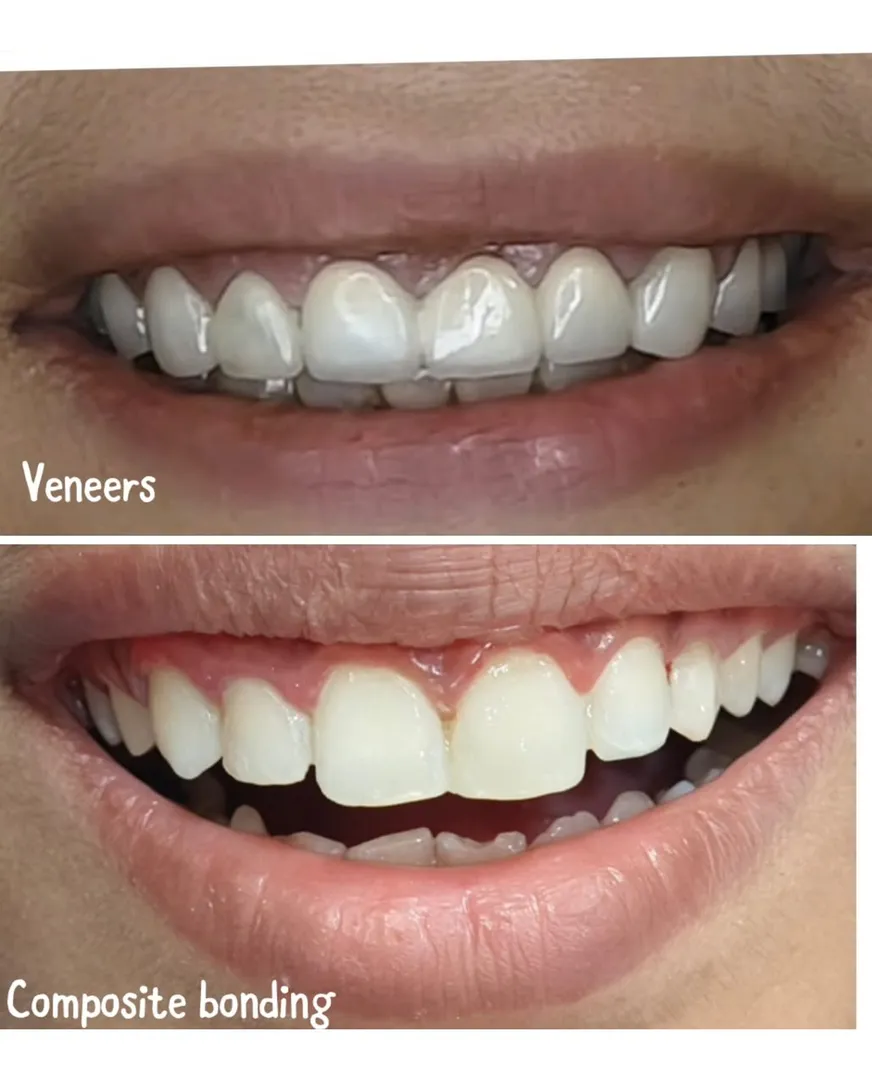
If you're unhappy with chipped, stained, uneven, or slightly crooked teeth, you've probably come across two popular cosmetic treatments: composite bonding and porcelain veneers.
Both can dramatically improve your smile, but they differ in terms of durability, appearance, cost, and the amount of tooth preparation required.
If you're considering a smile makeover in Thane or Mulund West Mumbai, this guide will help you understand which treatment may be best for your needs.
😊 What Is Composite Bonding?
Composite bonding is a cosmetic procedure in which a tooth-coloured resin material is applied directly to the tooth, shaped, and hardened using a special curing light.
It is commonly used to repair:
- Chipped teeth
- Small gaps
- Minor cracks
- Worn tooth edges
- Mild discoloration
- Slightly uneven teeth
Because very little or no tooth structure is removed, bonding is considered a minimally invasive treatment.
✨ What Are Porcelain Veneers?
Porcelain veneers are thin custom-made ceramic shells that are bonded to the front surface of teeth.
They are designed to improve:
- Tooth colour
- Shape
- Size
- Symmetry
- Minor alignment issues
Veneers provide a highly aesthetic and natural-looking smile and are often used as part of a comprehensive smile makeover.
⚖️ Composite Bonding vs Veneers: Comparison
FeatureComposite BondingPorcelain VeneersTooth PreparationMinimal or noneUsually minimalNumber of VisitsUsually 12–3AppearanceExcellentOutstanding, highly naturalStain ResistanceModerateExcellentDurability5–7 years10–15+ yearsRepairEasyMay require replacement if damagedCostLowerHigher
💰 Cost Comparison
Composite Bonding
Approximate cost:
₹3,000–₹8,000 per tooth
Ideal for patients seeking affordable cosmetic improvements.
Porcelain Veneers
Approximate cost:
₹10,000–₹25,000 per tooth
The cost depends on:
- Ceramic material
- Laboratory techniques
- Smile design complexity
- Number of veneers
Although veneers cost more initially, they generally last longer and resist staining better.
🦷 Which Problems Can Composite Bonding Correct?
Composite bonding is ideal for:
✔ Small chips
✔ Minor gaps
✔ Slightly uneven teeth
✔ Small fractures
✔ Mild discoloration
It works best when only modest cosmetic changes are required.
🌟 Which Problems Are Better Treated with Veneers?
Porcelain veneers are often recommended for:
✔ Moderate to severe discoloration
✔ Worn front teeth
✔ Multiple cosmetic concerns
✔ Smile symmetry
✔ Long-lasting smile transformations
Veneers can produce dramatic cosmetic improvements while maintaining a natural appearance.
⏱️ Treatment Timeline
Composite Bonding
Most cases are completed in:
1 appointment (30–90 minutes)
No laboratory fabrication is usually required.
Porcelain Veneers
Typical timeline:
Visit 1
- Smile analysis
- Digital photographs
- Tooth preparation (if needed)
- Digital scan or impressions
Visit 2
- Trial and placement of custom veneers
Usually completed within 1–2 weeks.
😌 Is Either Procedure Painful?
Both treatments are generally comfortable.
Composite Bonding
✔ Usually requires no anaesthesia
✔ Minimal tooth preparation
Veneers
✔ Minimal preparation
✔ Local anaesthesia may be used if required
Most patients return to normal activities immediately after treatment.
🪥 Maintenance
Regardless of the treatment you choose:
✔ Brush twice daily
✔ Floss every day
✔ Avoid biting hard objects
✔ Visit your dentist regularly
✔ Wear a night guard if you grind your teeth
Proper maintenance significantly extends the lifespan of both bonding and veneers.
👨⚕️ Which Option Is Better for You?
Composite Bonding May Be Ideal If:
✔ You want an affordable solution
✔ Only one or two teeth need improvement
✔ Minimal tooth alteration is preferred
✔ You want same-day results
Veneers May Be Better If:
✔ You want a complete smile makeover
✔ You desire the most natural appearance
✔ Long-term durability is important
✔ Your teeth have multiple cosmetic concerns
At Procare Dental LLP, every smile makeover begins with a detailed smile analysis, digital photographs, and personalized treatment planning to help patients choose the most suitable cosmetic option.
💡 Can Bonding Be Replaced with Veneers Later?
Yes.
Many patients begin with composite bonding and later choose porcelain veneers as their cosmetic goals evolve.
Your dentist can advise whether this is appropriate based on your oral health and treatment objectives.
🏥 Choosing the Right Cosmetic Dentist
Before starting treatment, look for a clinic that offers:
✔ Digital Smile Design
✔ Cosmetic dentistry expertise
✔ High-quality materials
✔ Transparent treatment planning
✔ Before-and-after smile makeover cases
Experience and careful planning are essential for achieving natural-looking, long-lasting results.
✅ Final Takeaway
Both composite bonding and porcelain veneers can beautifully transform your smile.
Choose Composite Bonding if you want:
✔ Lower cost
✔ Same-day treatment
✔ Minimal tooth preparation
✔ Minor cosmetic corrections
Choose Porcelain Veneers if you want:
✔ Superior aesthetics
✔ Better stain resistance
✔ Greater durability
✔ A comprehensive smile makeover
👉 The best choice depends on your smile goals, budget, and the condition of your teeth. A consultation with an experienced cosmetic dentist will help you decide which option will deliver the most natural and long-lasting results.
📍 Procare Dental LLP – Thane & Mulund
📍 Thane Branch: Nitin Company Junction, Prestige Gardens, Thane West
📞 7071876876
To know more tap on the link given below:
https://www.procaredental.in/latest-update/best-teeth-whitening-options-in-mumbai-for-a-brighter-smile/172
Keywords