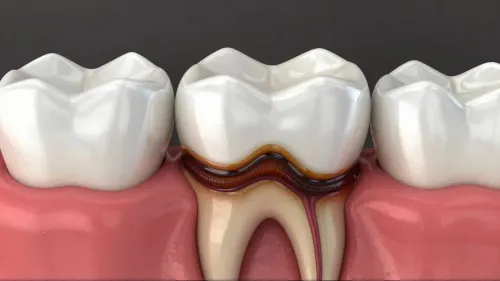
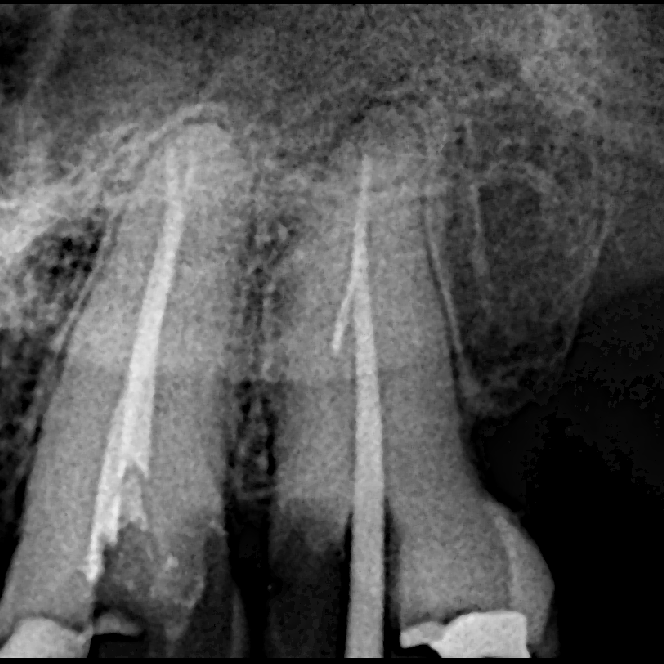
A broken tooth can be alarming, but a broken tooth does not automatically mean it needs to be extracted.
In many cases, a damaged tooth can be restored with a filling, onlay, crown or root canal treatment followed by a crown. The key question is whether there is enough healthy tooth structure remaining to restore the tooth predictably.
The treatment depends on how the tooth broke, how deep the fracture extends, whether the nerve is affected and whether the root is still healthy.
🦷 Can a Broken Tooth Be Saved?
Often, yes.
A dentist will first determine whether the fracture is limited to the visible part of the tooth or extends deeper toward the gum and root.
A tooth may be restorable when:
- Enough healthy tooth structure remains
- The root is intact
- The fracture does not extend vertically through the root
- The tooth has adequate supporting bone
- The decay or damage can be removed while leaving a stable foundation
- The tooth can be properly sealed and protected
If sufficient tooth structure remains, a crown may be used to protect and restore the tooth.
👑 When Is a Crown Used for a Broken Tooth?
A crown covers and protects the remaining tooth structure.
It may be recommended when a significant portion of the tooth has fractured or when the tooth has become structurally weakened.
A crown can:
- Restore the shape of the tooth
- Restore chewing function
- Protect weakened tooth structure
- Improve appearance
- Reduce the risk of further fracture
However, a crown isn't suitable for every broken tooth.
The dentist needs to determine whether there is a strong enough foundation underneath it.
🦷 What If the Nerve Is Exposed?
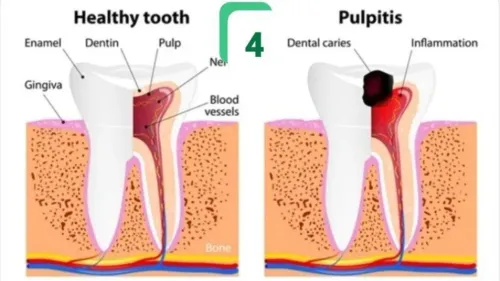
If the fracture reaches the pulp—the innermost part of the tooth containing nerves and blood vessels—you may develop:
- Severe sensitivity
- Spontaneous toothache
- Pain while chewing
- Prolonged sensitivity to hot or cold
- Infection or an abscess
In such cases, root canal treatment may be necessary before the tooth is restored with a crown.
A common treatment sequence is:
Root canal → build-up/core → crown
The exact treatment depends on how much tooth structure remains.
🦷 What If Only a Small Piece Has Broken?
Not every broken tooth needs a crown.
If only a small portion of the tooth has chipped and the remaining structure is strong, treatment may involve:
Composite bonding
The missing portion can sometimes be rebuilt using tooth-coloured composite.
Filling
A suitable small defect may be restored with a filling.
Polishing
A very minor enamel chip may sometimes require little more than smoothing.
The dentist chooses the most conservative treatment that provides adequate strength and function.
⚠️ When Is a Crown Not Enough?
A crown cannot repair a tooth if the underlying tooth structure is fundamentally unsuitable for restoration.
Extraction may be recommended when:
- The tooth is fractured vertically through the root
- The fracture extends deep below the gum
- There is insufficient healthy tooth structure
- Severe decay has destroyed most of the tooth
- The tooth cannot be predictably sealed
- Supporting bone has been severely compromised
- Previous treatment has failed and the tooth is no longer predictably restorable
In these situations, placing a crown may only postpone the inevitable and could expose you to unnecessary treatment.
🦷 Cracked Tooth vs Broken Tooth
These terms are sometimes used interchangeably, but they can describe different situations.
Broken tooth
A visible portion of the tooth has fractured or chipped.
Cracked tooth
A crack may extend through the tooth without the tooth completely separating.
Some cracks are superficial and manageable.
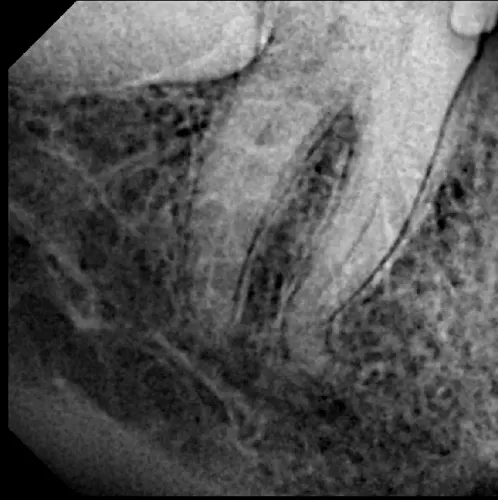
Others can extend toward the pulp or root and compromise the long-term prognosis.
The direction and depth of the fracture matter enormously.
🦷 What Is a Vertical Root Fracture?
A vertical root fracture is one of the more serious types of tooth fracture.
The crack extends along the root and may allow bacteria to enter the surrounding tissues.
It can be associated with:
- Localised gum swelling
- Recurrent infection
- Pain while chewing
- A deep isolated periodontal pocket
- Bone loss around the fracture
Unfortunately, a tooth with a confirmed vertical root fracture often cannot be predictably saved with a crown alone.
Extraction may be necessary.
🩻 How Does the Dentist Decide Whether to Save the Tooth?
Your dentist may evaluate:
1. How much tooth is left
Is there enough healthy tooth structure to support a restoration?
2. Where the fracture is
Is the fracture above the gum, at the gumline or extending below it?
3. Whether the pulp is involved
Does the tooth require root canal treatment?
4. Root condition
Is the root intact and healthy?
5. Supporting bone and gums
Is there sufficient periodontal support?
6. Previous treatment
Has the tooth already undergone root canal treatment, a large filling or another restoration?
7. Your bite
Will the restored tooth be exposed to excessive forces?
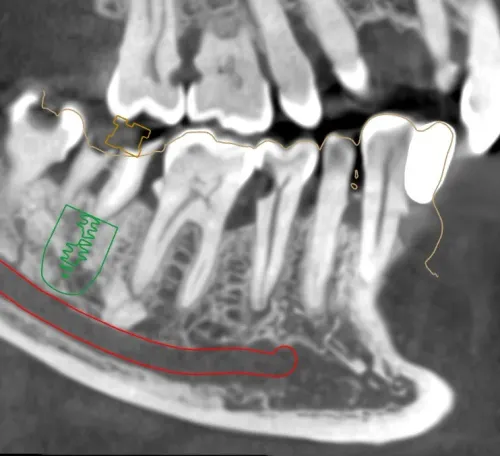
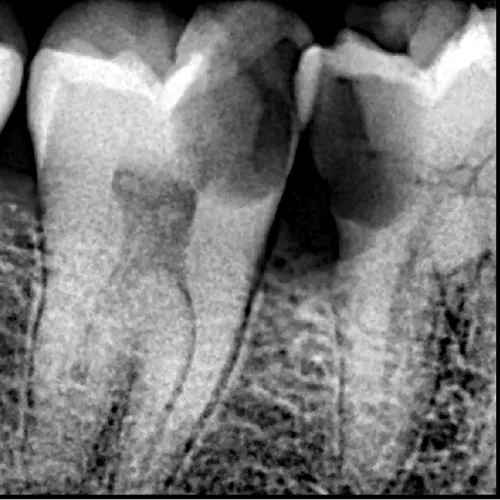
Clinical examination and dental X-rays are commonly used. In selected complicated cases, CBCT imaging may provide additional information.
🦷 Why Does a Tooth Break in the First Place?
Common causes include:
- Large old fillings
- Tooth decay
- Previous root canal treatment
- Teeth grinding or clenching
- Trauma
- Biting hard objects
- Weakened tooth structure
- Age-related wear
A tooth with a large filling may have relatively little natural tooth structure remaining, making it more susceptible to fracture.
🦷 Can a Root Canal Tooth Break?
Yes.
A tooth that has undergone root canal treatment can become structurally compromised, particularly when a large amount of tooth structure has already been lost.
This is why a protective crown is often recommended for heavily damaged posterior teeth after root canal treatment.
However, the need for a crown depends on the individual tooth and amount of remaining structure.
🚨 What Should You Do If Your Tooth Suddenly Breaks?
Don't ignore it—even if it doesn't hurt.
A broken tooth can expose deeper tooth structure and make it easier for bacteria to enter.
Until you see your dentist:
- Avoid chewing hard foods on that side
- Keep the area clean
- Avoid very hot or cold foods if the tooth is sensitive
- Don't try to glue the broken piece back yourself
- If a piece has broken off, keep it and take it to your dentist
If you have severe pain, facial swelling, fever or difficulty swallowing, seek urgent dental care.
🦷 Can a Broken Tooth Be Saved Without a Crown?
Sometimes.
Depending on the damage, options may include:
Small chip → Bonding
Moderate structural damage → Onlay/partial-coverage restoration
Extensive damage → Crown
Pulp involvement → Root canal + appropriate restoration
Non-restorable fracture → Extraction
The goal should be to preserve natural tooth structure whenever the tooth can be restored predictably.
🆚 Crown vs Extraction
Save With CrownExtractionNatural tooth retained✅❌Root retainedUsually❌Requires sufficient tooth structure✅Not applicableRoot canal may be neededSometimesNoSurgical procedureUsually notExtraction requiredFuture replacement neededUsually noUsually yesLong-term maintenanceRequiredReplacement may be required
If a tooth is genuinely restorable, preserving the natural tooth is often preferable to extracting it and replacing it.
But a tooth that is not predictably restorable should not be preserved at any cost.
🦷 What Happens If the Tooth Needs Extraction?
If the tooth cannot be saved, you still have several options for replacing it.
Depending on the situation, these can include:
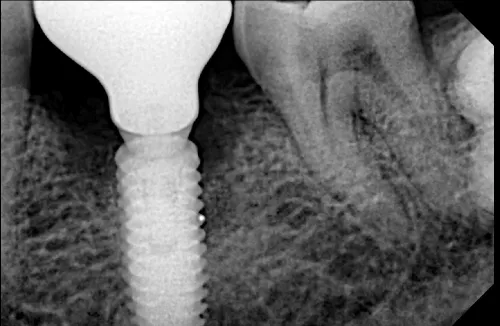
- Dental implant
- Dental bridge
- Removable partial denture
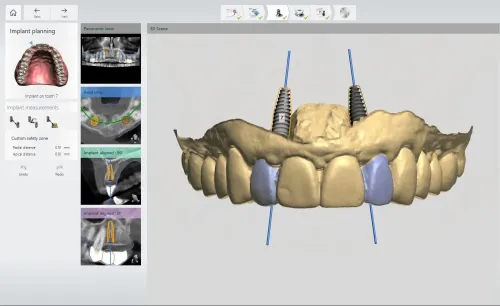
If you are considering an implant, it is useful to discuss this before the extraction, because the extraction can sometimes be planned to preserve the bone and soft tissues needed for future implant placement.
❓ Frequently Asked Questions
Can a broken tooth be fixed with a crown?
Yes, if enough healthy tooth structure remains and the root and supporting tissues are suitable.
Does every broken tooth need a root canal?
No. Root canal treatment is generally needed when the pulp is irreversibly inflamed, infected or exposed, rather than simply because a tooth has fractured.
Does every broken tooth need a crown?
No. Small chips or limited damage may be treated with bonding or other conservative restorations.
Can a tooth broken below the gumline be saved?
Sometimes, depending on the depth and direction of the fracture and how much healthy tooth structure remains. Some fractures extending too far below the gum or into the root make the tooth non-restorable.
What if my broken tooth doesn't hurt?
A lack of pain does not necessarily mean the tooth is healthy. A fracture can exist without immediate symptoms, so it is still worth having it examined.
Is it better to save a tooth or extract it?
If the tooth can be predictably restored and maintained, preserving the natural tooth is generally preferable. If the fracture makes restoration unpredictable, extraction followed by an appropriate replacement may be the better long-term option.
🦷 The Bottom Line
A broken tooth doesn't automatically need extraction.
The important question is not simply “How much of the tooth has broken?”
It is:
“Is there enough healthy tooth and root remaining to restore it predictably?”
If the tooth is restorable, treatment may range from bonding or an onlay to root canal treatment followed by a crown.
If the fracture extends into the root or there isn't enough healthy tooth structure to support a restoration, extraction may be the safer option.
The earlier a broken tooth is evaluated, the more options you may have for saving it.
If you have a broken or cracked tooth in Thane or Mulund West Mumbai, an examination and appropriate X-ray—and sometimes CBCT—can help determine whether the tooth can be saved or needs to be replaced.
Procare Dental LLP – Thane & Mulund West, Mumbai
📞 7071876876
Keywords