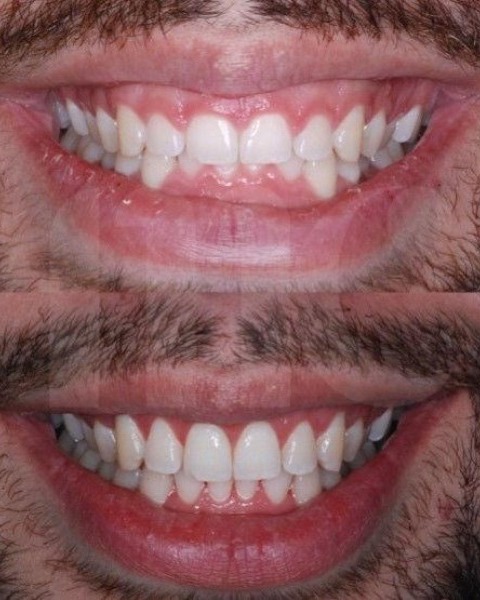
Do you feel that too much gum shows when you smile?
A smile in which a noticeable amount of gum tissue is visible above the upper teeth is commonly referred to as a gummy smile or excessive gingival display.
A gummy smile is not necessarily a dental problem. For some people, it is simply part of their natural facial appearance. However, if you are unhappy with how your smile looks, there are several treatment options available.
The important point is that there is no single treatment for a gummy smile. The right approach depends on why the gums appear excessive.
If you are considering gummy smile treatment in Thane or Mulund West Mumbai, understanding the cause is the first step.
😊 What Is a Gummy Smile?
A gummy smile generally refers to a smile where a relatively large amount of gum is visible above the upper front teeth.
There is no single amount of gum display that is automatically considered abnormal. Smile aesthetics are individual, and factors such as lip position, tooth proportions, gum contours and facial proportions all influence how a smile appears.
The important question is:
What is causing the excess gum display?
Once the cause is identified, treatment can be planned accordingly.
🦷 What Causes a Gummy Smile?
Several different factors can contribute to excessive gum display.
1. Excess Gum Tissue
Sometimes the teeth have erupted normally, but there is more gum covering the visible portion of the teeth.
This can make the teeth appear shorter than they actually are.
In suitable cases, gum contouring or gingivectomy can reshape the gumline and reveal more of the natural tooth.
2. Altered Passive Eruption
During normal tooth development, the gum tissue gradually moves upward as the teeth erupt.
If this process doesn't occur as expected, more gum may remain over the crowns of the teeth.
This is sometimes referred to as altered passive eruption.
In appropriate cases, periodontal or crown-lengthening procedures can expose more of the tooth structure.
3. Hyperactive Upper Lip
Some people have an upper lip that moves significantly upward when they smile.
The teeth themselves may have normal proportions, but the upper lip elevates higher than expected, exposing more gum.
Treatment may be different in this situation because removing gum tissue won't necessarily correct the underlying lip movement.
4. Short Upper Lip
The vertical length of the upper lip can influence how much gum is visible during smiling.
A relatively short upper lip may expose more of the upper teeth and gums.
A careful facial and smile analysis is therefore important before choosing treatment.
5. Tooth Position or Vertical Maxillary Excess
In some patients, the relationship between the upper jaw and the facial skeleton contributes significantly to excessive gum display.
If the upper jaw is positioned more vertically, a larger amount of gum may be visible during smiling.
More extensive skeletal treatment may be considered in selected cases.
6. Tooth Proportions
Teeth that appear short or have unfavourable proportions can make the gums appear more prominent.
Sometimes the issue isn't simply 'too much gum.'
It may be a combination of:
Gum position + tooth length + tooth shape + lip movement.
This is why simply removing gum tissue isn't always the correct solution.
🔍 How Is the Cause of a Gummy Smile Diagnosed?
Before treatment, your dentist should evaluate your smile rather than immediately recommending a procedure.
Assessment may include:
- Facial proportions
- Lip length
- Upper lip movement during smiling
- Amount of gum display
- Tooth dimensions
- Gum thickness
- Gumline symmetry
- Tooth position
- Bite
- Jaw relationship
Photographs and digital smile analysis can also be useful for evaluating the relationship between the teeth, gums and lips.
🛠️ What Are the Treatment Options for a Gummy Smile?
The appropriate treatment depends on the underlying cause.
🦷 1. Gum Contouring / Gingivectomy
If excessive gum tissue is covering otherwise healthy teeth, the gumline can sometimes be reshaped.
This procedure may:
- Reveal more of the tooth
- Improve tooth proportions
- Create a more symmetrical gumline
- Reduce the amount of visible gum
It is often considered when the issue is primarily related to excess gingival tissue.
🦷 2. Crown Lengthening
When more tooth structure needs to be exposed, crown lengthening may be considered.
This can involve reshaping the gum and, where necessary, the underlying bone.
It is different from simple gum contouring because the amount of supporting tissue and bone around the tooth needs to be considered.
Crown lengthening can be particularly useful when altered passive eruption contributes to a gummy smile.
💉 3. Botox for Gummy Smile
In selected patients, excessive gum display is primarily caused by overactivity of the upper lip muscles.
Botulinum toxin can temporarily reduce the amount of upper-lip elevation during smiling.
This can decrease gum display without altering the teeth or gums.
However:
- The effect is temporary
- Treatment needs to be repeated
- It does not correct excess gum tissue or jaw position
- It needs to be administered appropriately by a qualified professional
It may be useful for selected patients but isn't the right solution for every gummy smile.
🦷 4. Orthodontic Treatment
In some cases, the position of the teeth contributes to excessive gum display.
Orthodontic treatment may be used to reposition the teeth and improve the relationship between the teeth and gums.
This is particularly relevant when gummy smile is associated with:
- Excessive tooth eruption
- Deep bite
- Malocclusion
- Tooth positioning problems
Orthodontics may sometimes be combined with other cosmetic or periodontal treatments.
🦷 5. Veneers or Cosmetic Restorations
If the teeth are unusually short, worn or have unfavourable proportions, veneers or other restorative treatments may sometimes improve the overall smile proportions.
However, veneers should not be used simply to hide a gummy smile without understanding its cause.
If excess gum tissue is the primary problem, gum treatment may be more appropriate.
🦴 6. Orthognathic Surgery
For patients in whom significant vertical excess of the upper jaw contributes to excessive gingival display, orthognathic surgery may be considered.
This is a much more extensive treatment than gum contouring or Botox and is reserved for selected cases where the underlying skeletal relationship requires correction.
🧩 7. Combination Treatment
Some gummy smiles have more than one contributing factor.
For example:
Excess gum + short-looking teeth + excessive upper-lip movement
may require a combination approach.
Treatment might involve:
Gum contouring + cosmetic dentistry
or
Orthodontics + periodontal treatment
or another combination depending on the diagnosis.
This is why a personalised smile assessment is so important.
🆚 Gummy Smile Treatment Options at a Glance
CausePossible TreatmentExcess gum tissueGum contouring / gingivectomyAltered passive eruptionCrown lengtheningExcessive upper-lip movementBotulinum toxin in selected casesTooth positionOrthodontic treatmentShort/worn teethRestorative/cosmetic treatmentSkeletal contributionOrthognathic surgery in selected casesMultiple causesCombination treatment
😊 Is Gum Contouring the Same as Crown Lengthening?
No.
They are related but not identical procedures.
Gum contouring
Primarily reshapes the gum tissue to create a more attractive gumline.
Crown lengthening
May involve both gum tissue and the underlying supporting bone to expose an appropriate amount of tooth structure.
Your dentist or periodontist will determine which approach is appropriate based on the anatomy around the teeth.
⏳ How Long Does Gummy Smile Treatment Take?
The timeline depends on the treatment.
Gum contouring
May be completed relatively quickly, with healing occurring over the following weeks.
Crown lengthening
Requires a longer healing period before the final appearance is fully established.
Botox
Produces a temporary effect that generally requires periodic maintenance.
Orthodontics
Usually requires a significantly longer treatment period.
Orthognathic surgery
Involves extensive planning and a substantially longer recovery process.
Your dentist can provide a more accurate timeline after evaluating the cause.
🩺 Is Gummy Smile Treatment Painful?
The level of discomfort depends on the procedure.
Gum contouring and crown-lengthening procedures are performed with appropriate local anaesthesia.
Some tenderness or swelling may occur afterward.
Botulinum toxin treatment generally involves minimal discomfort at the injection sites.
Your dentist will explain the expected recovery for the specific treatment being considered.
🦷 Can a Gummy Smile Be Treated Without Surgery?
Sometimes.
If excessive gum display is primarily related to upper-lip movement, botulinum toxin may be an option for selected patients.
Orthodontic treatment can also address certain tooth-position-related causes without gum surgery.
However, if excess gum tissue or underlying bone is the primary cause, a surgical periodontal procedure may provide a more appropriate solution.
❓ Frequently Asked Questions
Is a gummy smile a dental problem?
Not necessarily. A gummy smile can be a normal variation in facial appearance. Treatment is generally considered when the patient wants to change the appearance or when there is an associated dental/periodontal concern.
Can gum contouring fix a gummy smile?
It can be very effective when excess gum tissue is the main cause. It will not correct excessive upper-lip movement or significant skeletal factors.
Does Botox permanently fix a gummy smile?
No. Botulinum toxin provides a temporary reduction in upper-lip muscle activity, so the treatment needs to be repeated to maintain the effect.
Are veneers good for a gummy smile?
Veneers may help in selected cases where tooth proportions contribute to the appearance. They are not a universal treatment for gummy smiles.
Can a gummy smile come back after gum contouring?
The long-term stability depends on the underlying cause, the amount and type of tissue treated, tooth eruption patterns and individual healing. Your dentist can discuss the expected stability for your specific case.
What is the best treatment for a gummy smile?
There isn't one universal treatment. The cause of the gummy smile determines the treatment.
🦷 The Bottom Line
A gummy smile is not simply a case of “too much gum.”
It can be caused by:
Gum tissue + tooth eruption + lip movement + tooth position + jaw position
and sometimes by a combination of these factors.
The most predictable approach is therefore to diagnose the cause first and then choose the least invasive treatment that addresses it.
If you're considering gummy smile treatment in Thane or Mulund West Mumbai, a comprehensive smile analysis can help determine whether you would benefit from gum contouring, crown lengthening, orthodontics, botulinum toxin, cosmetic dentistry or a combination approach.
Procare Dental LLP – Thane & Mulund West, Mumbai
📞 7071876876
Keywords